


Classical French Ceramic Floor with Lush Double Borders, Early 20th Century
Currently in France and soon to be shipped to The French Antique Tile Company
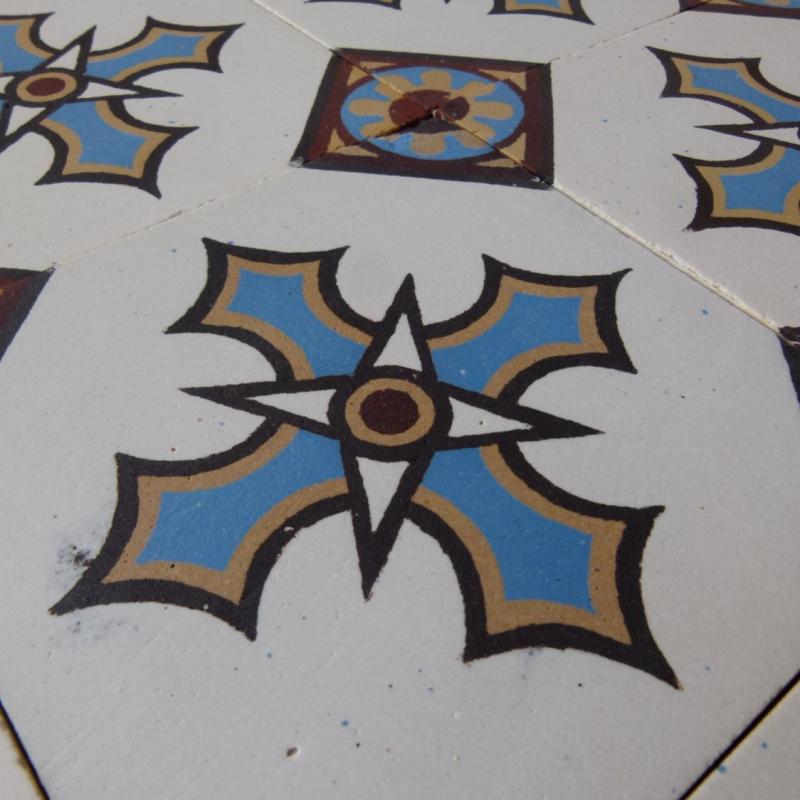
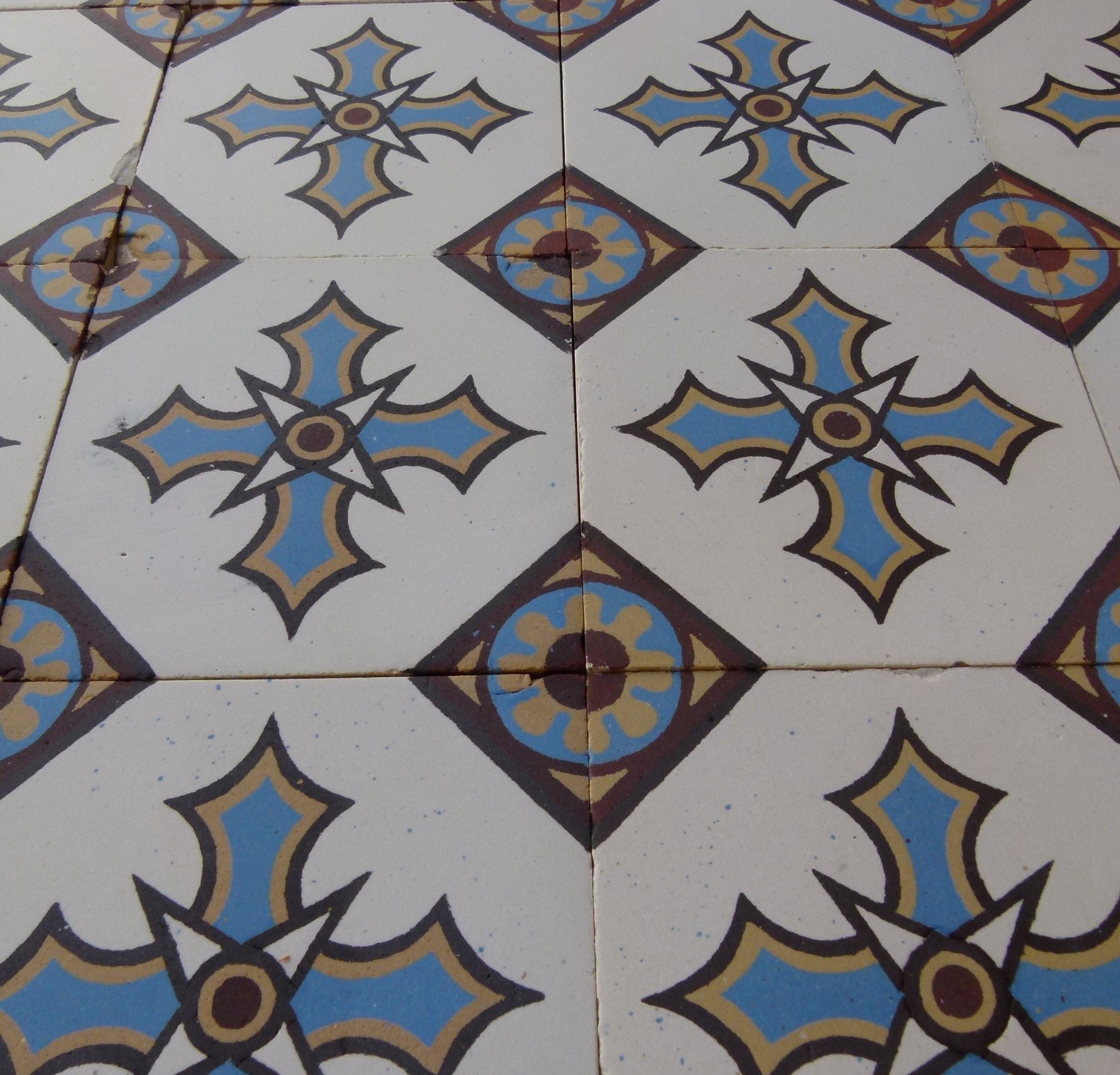
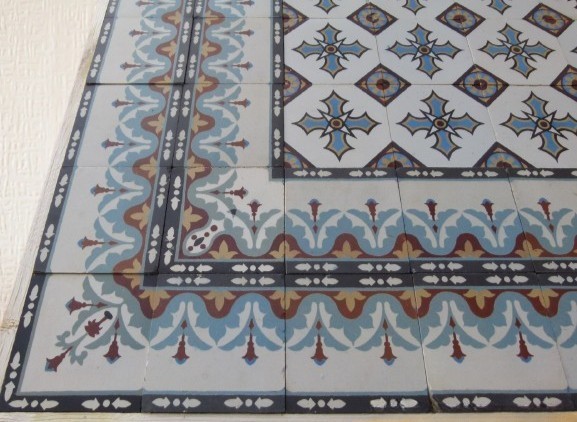
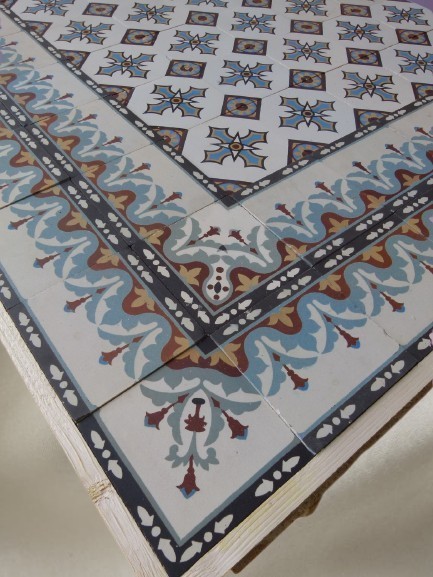
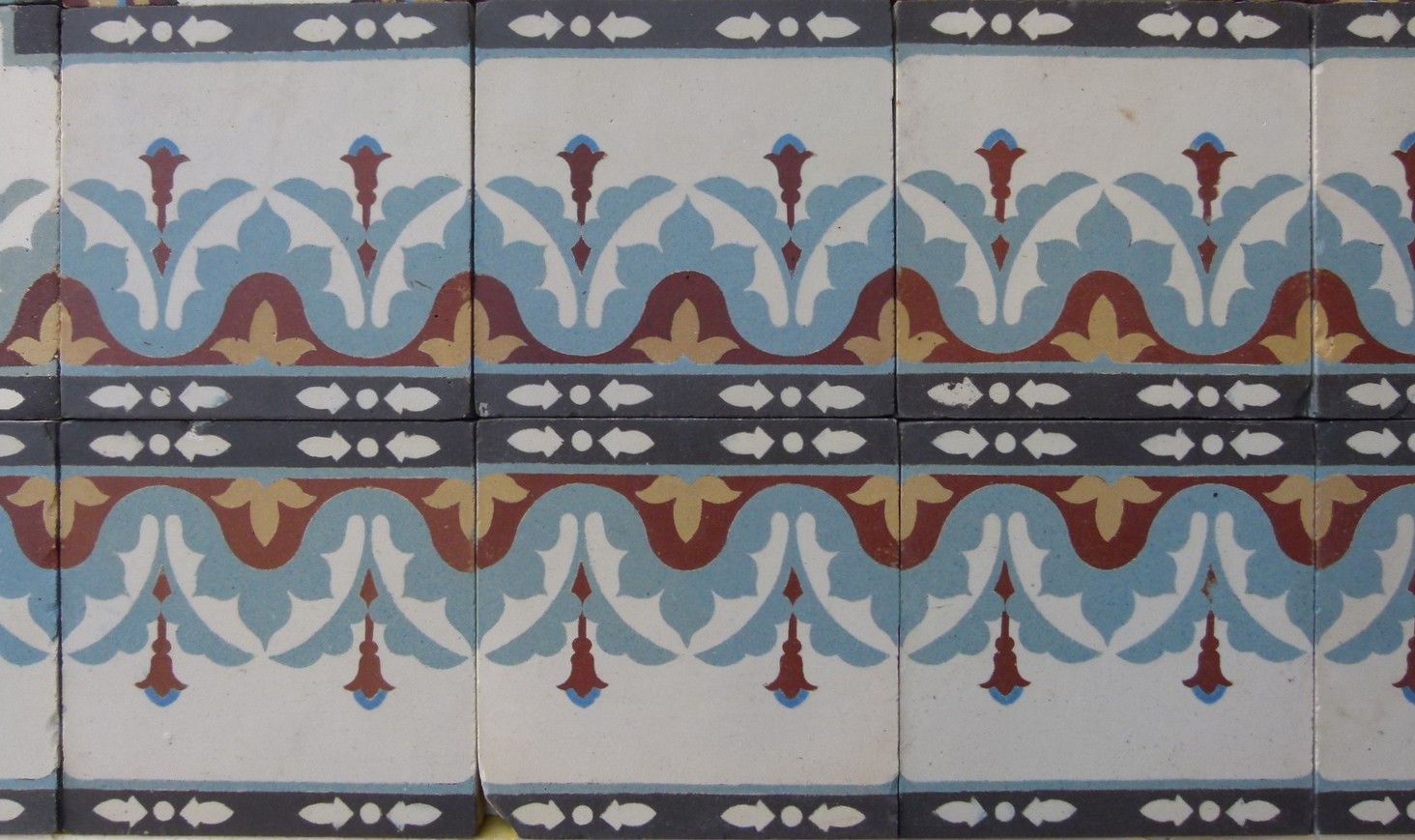
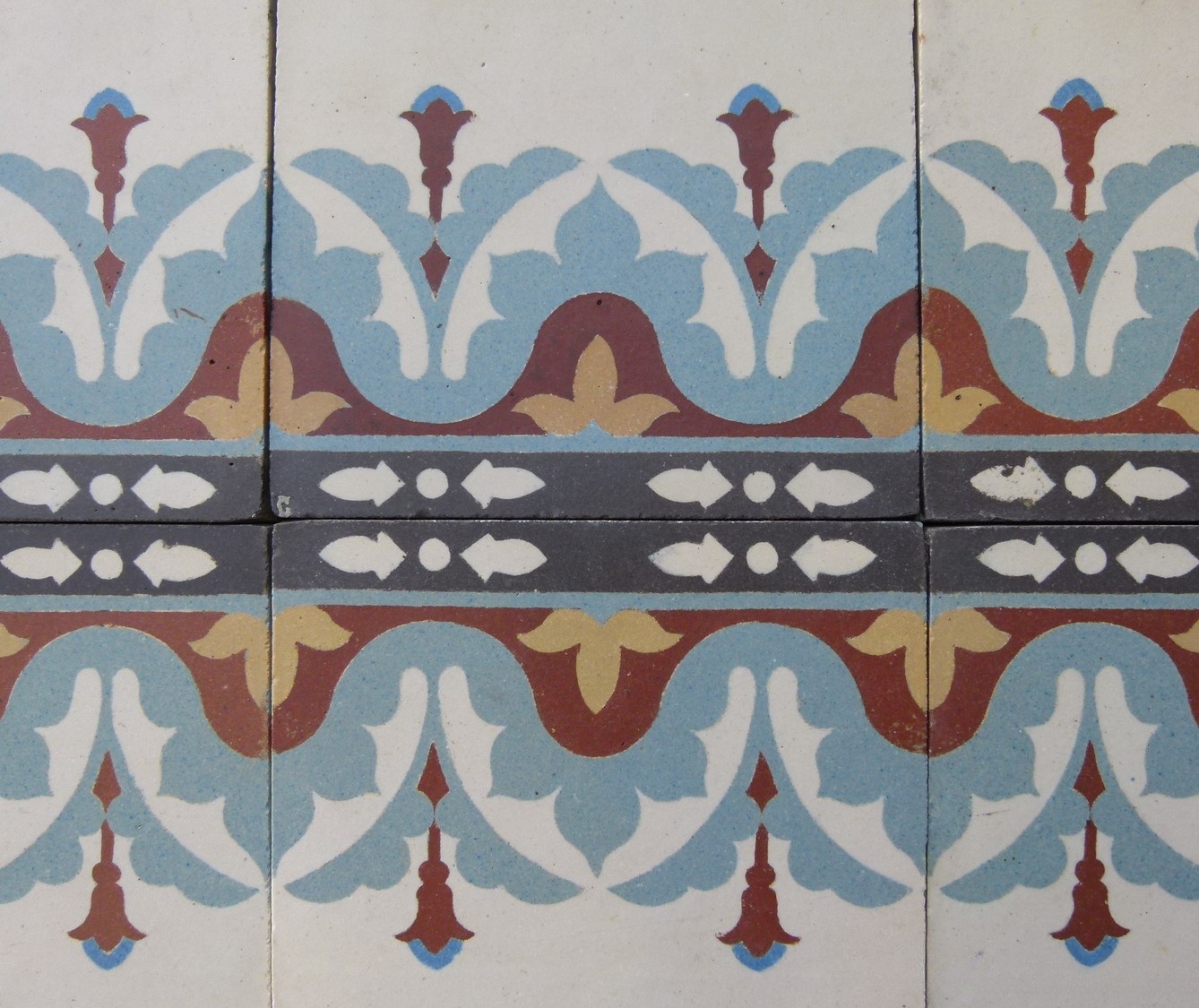
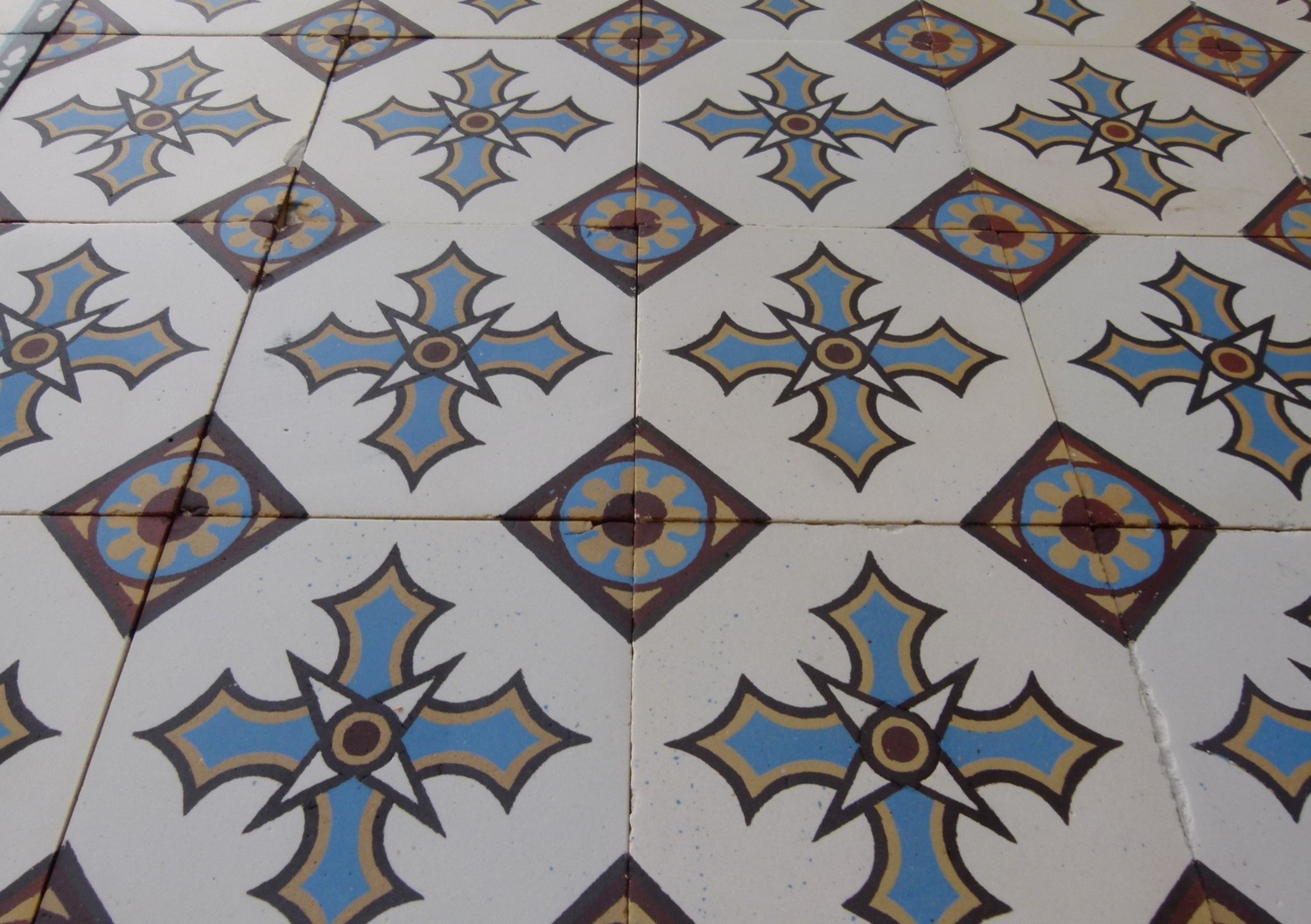
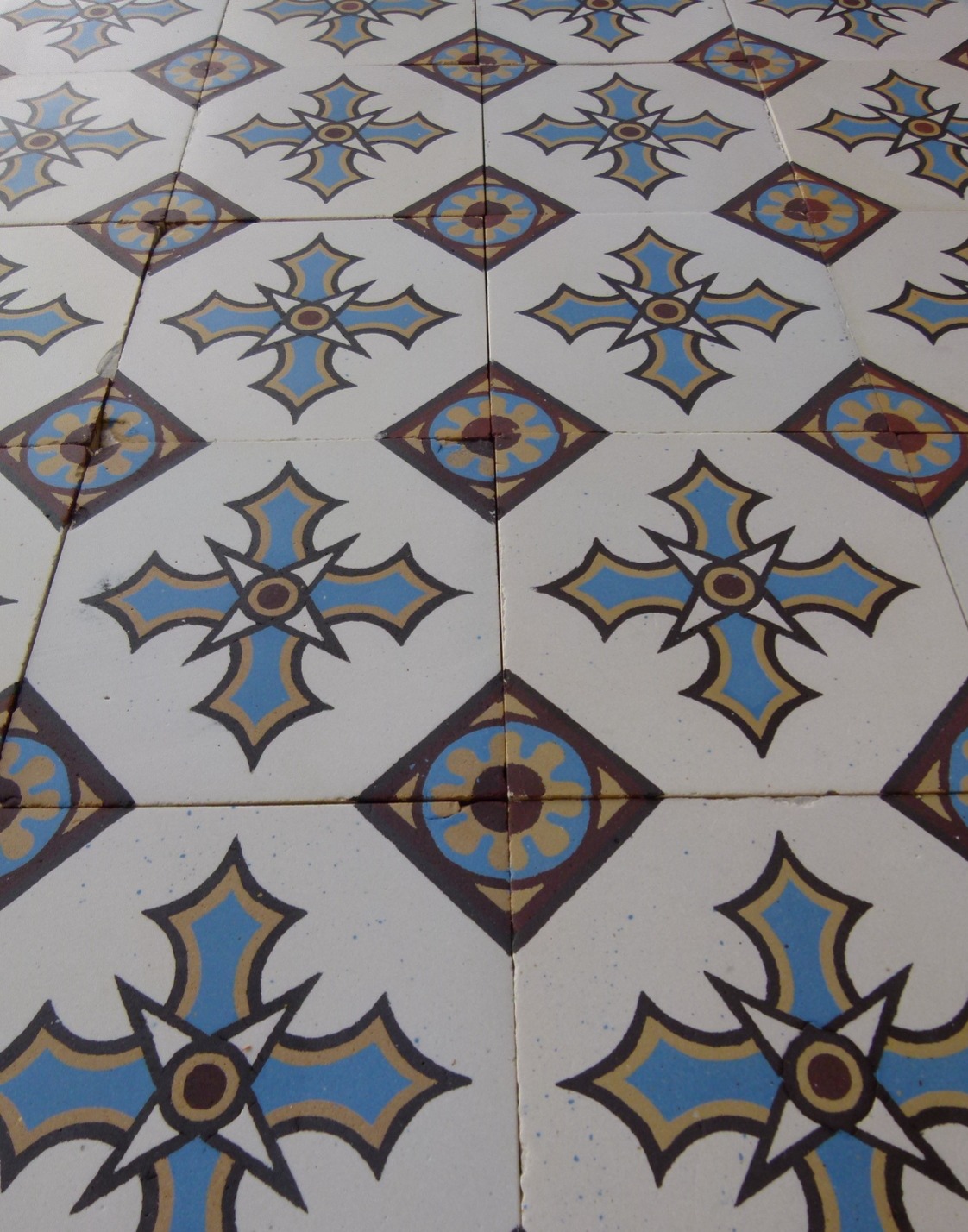
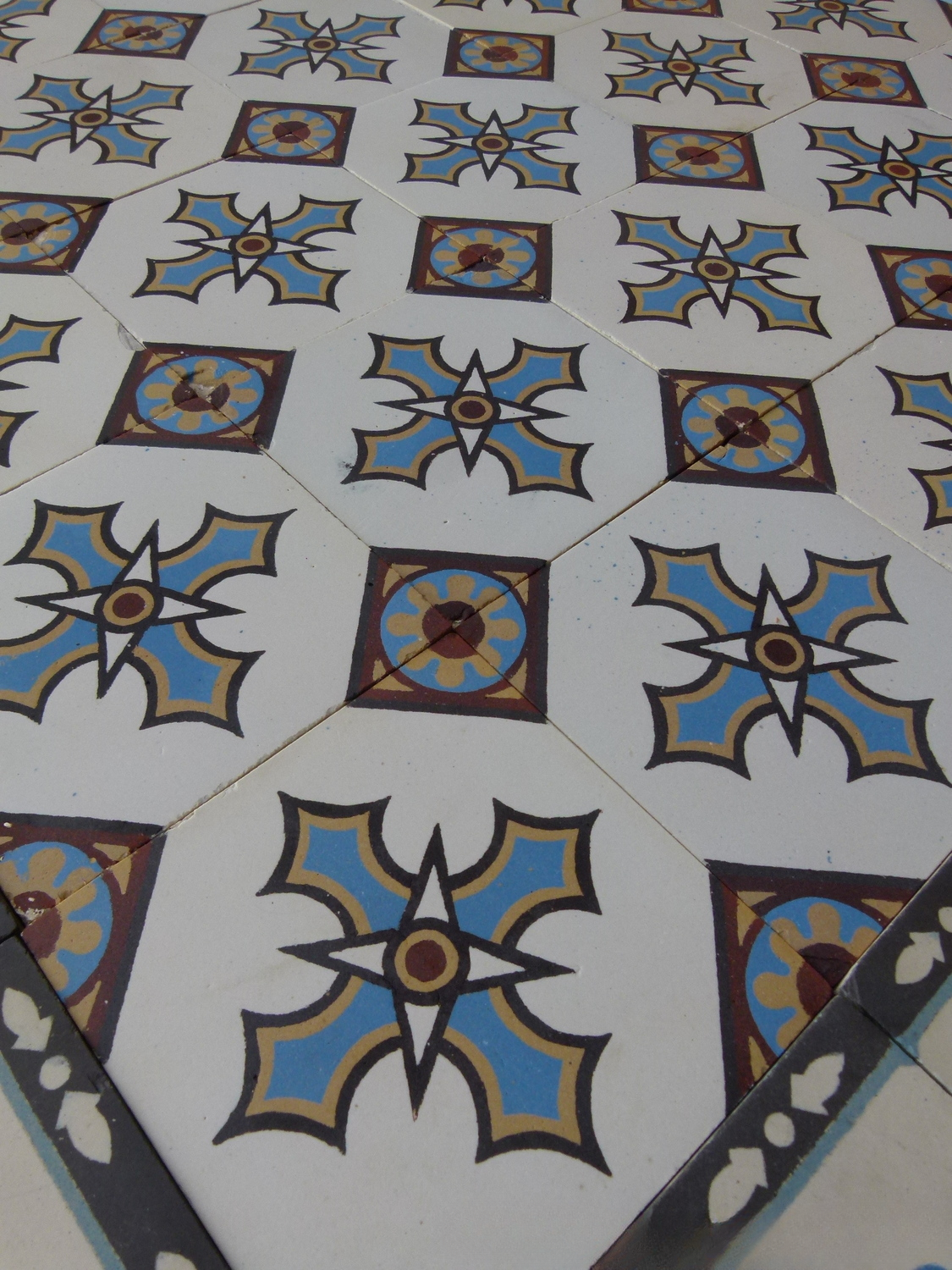
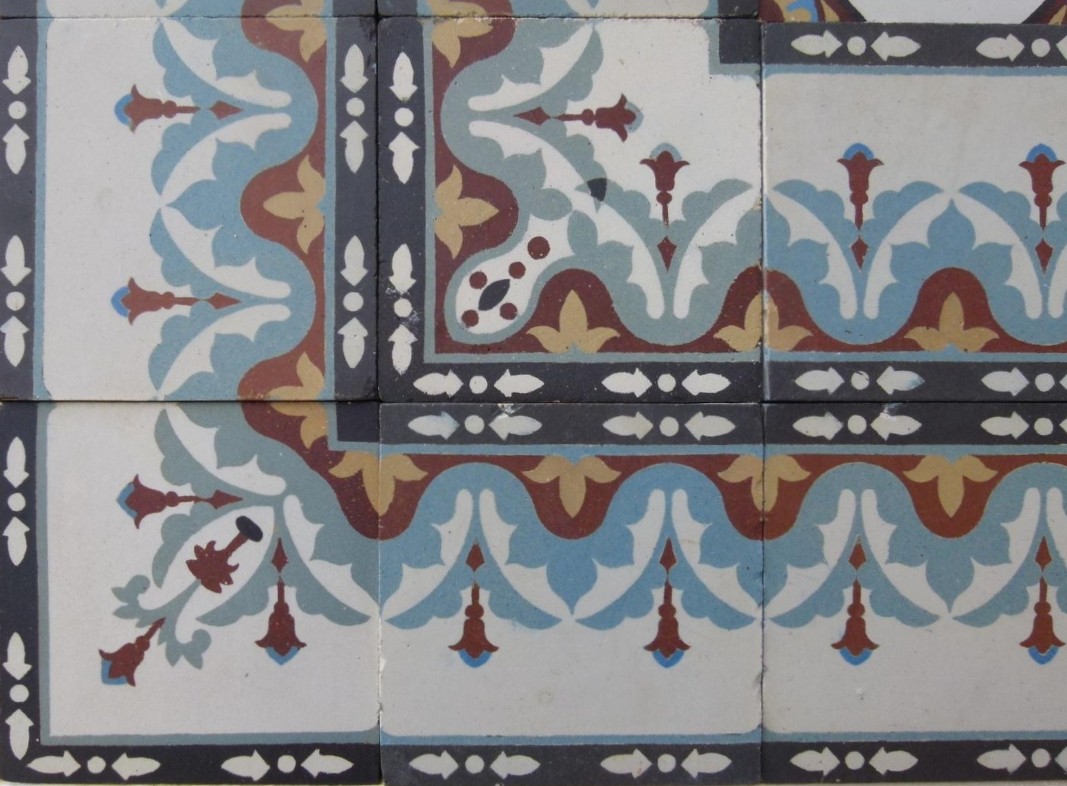
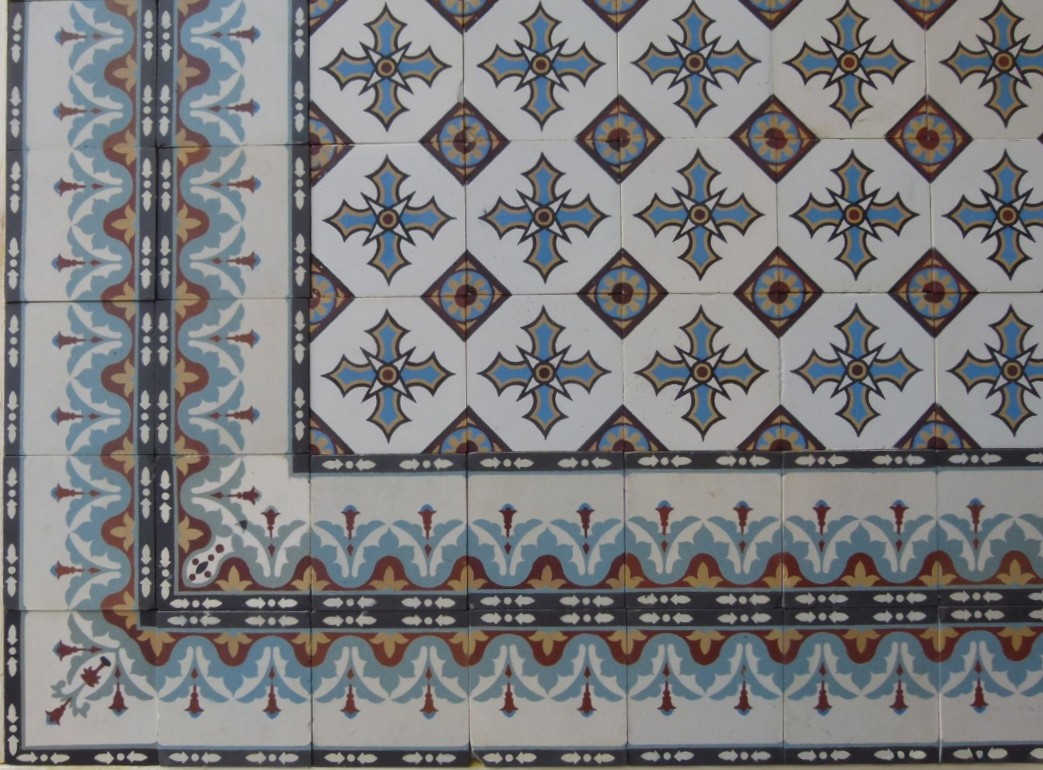
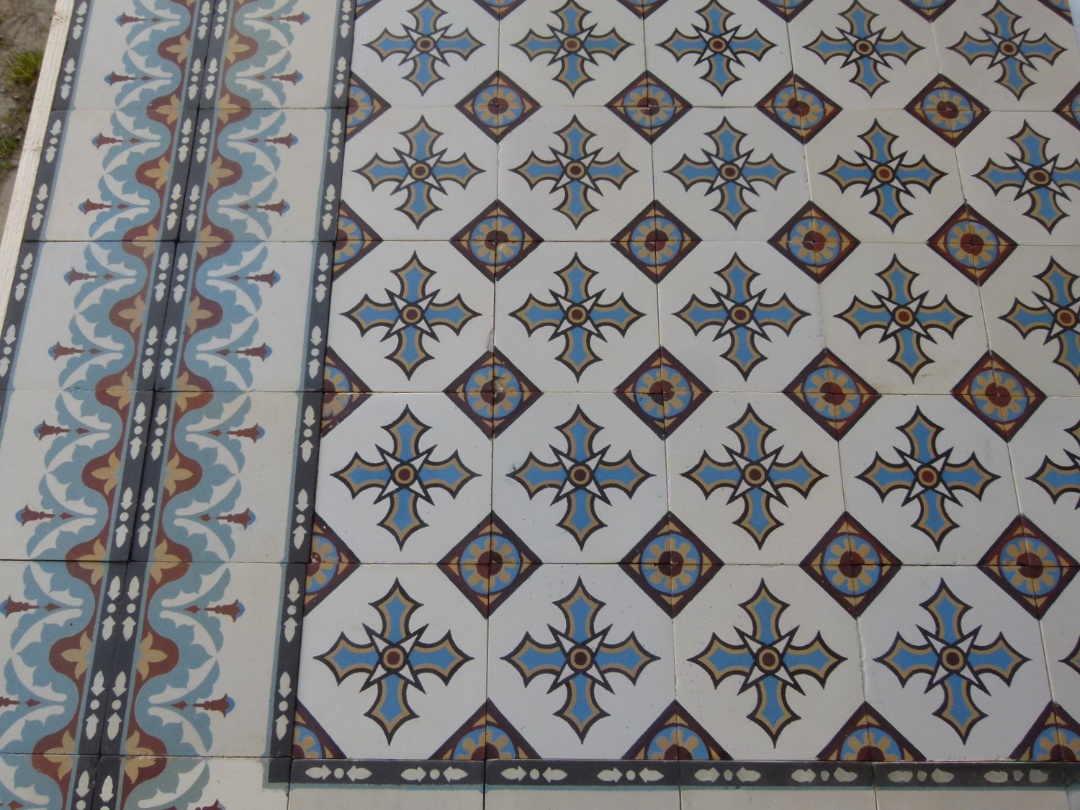
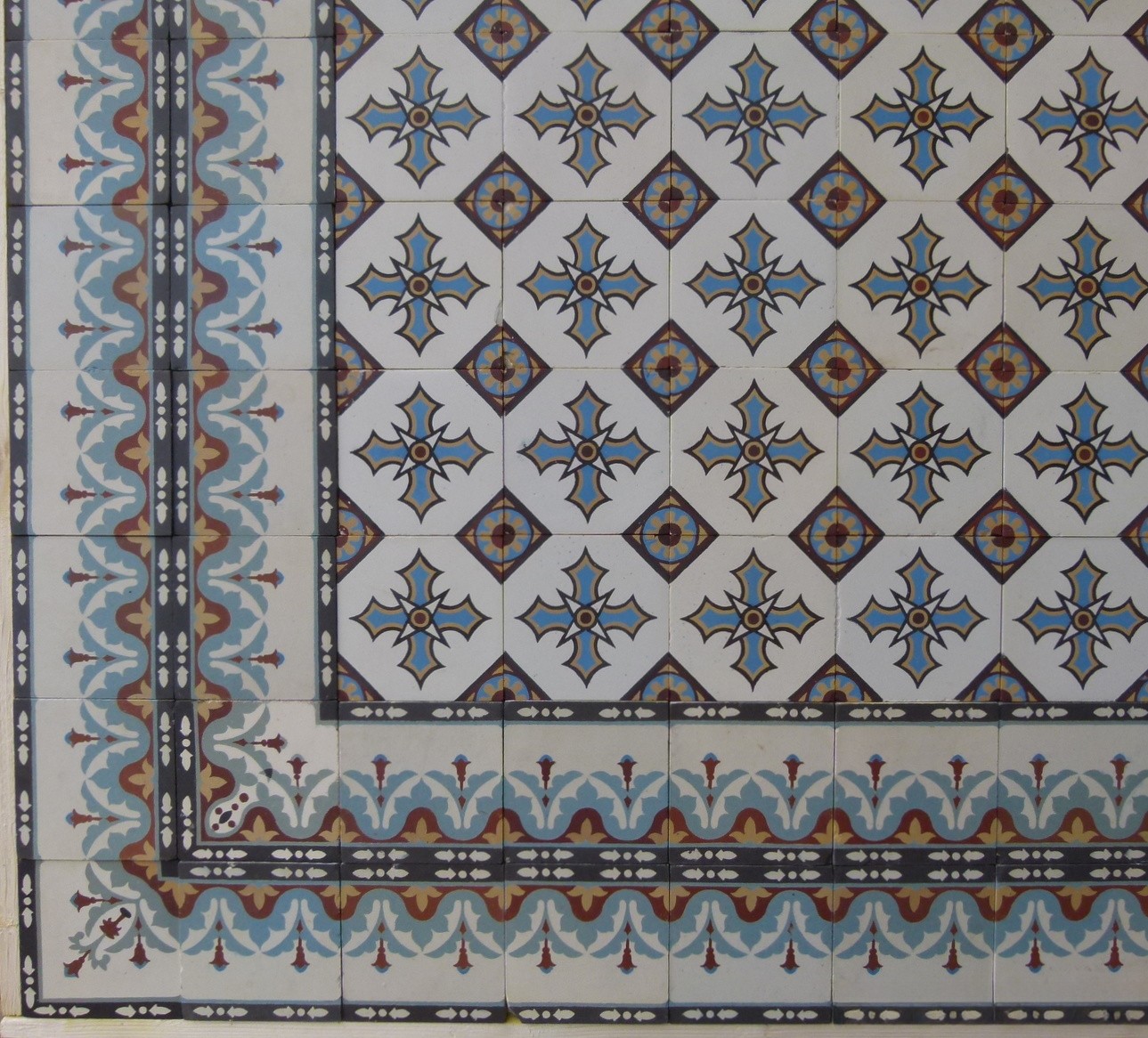
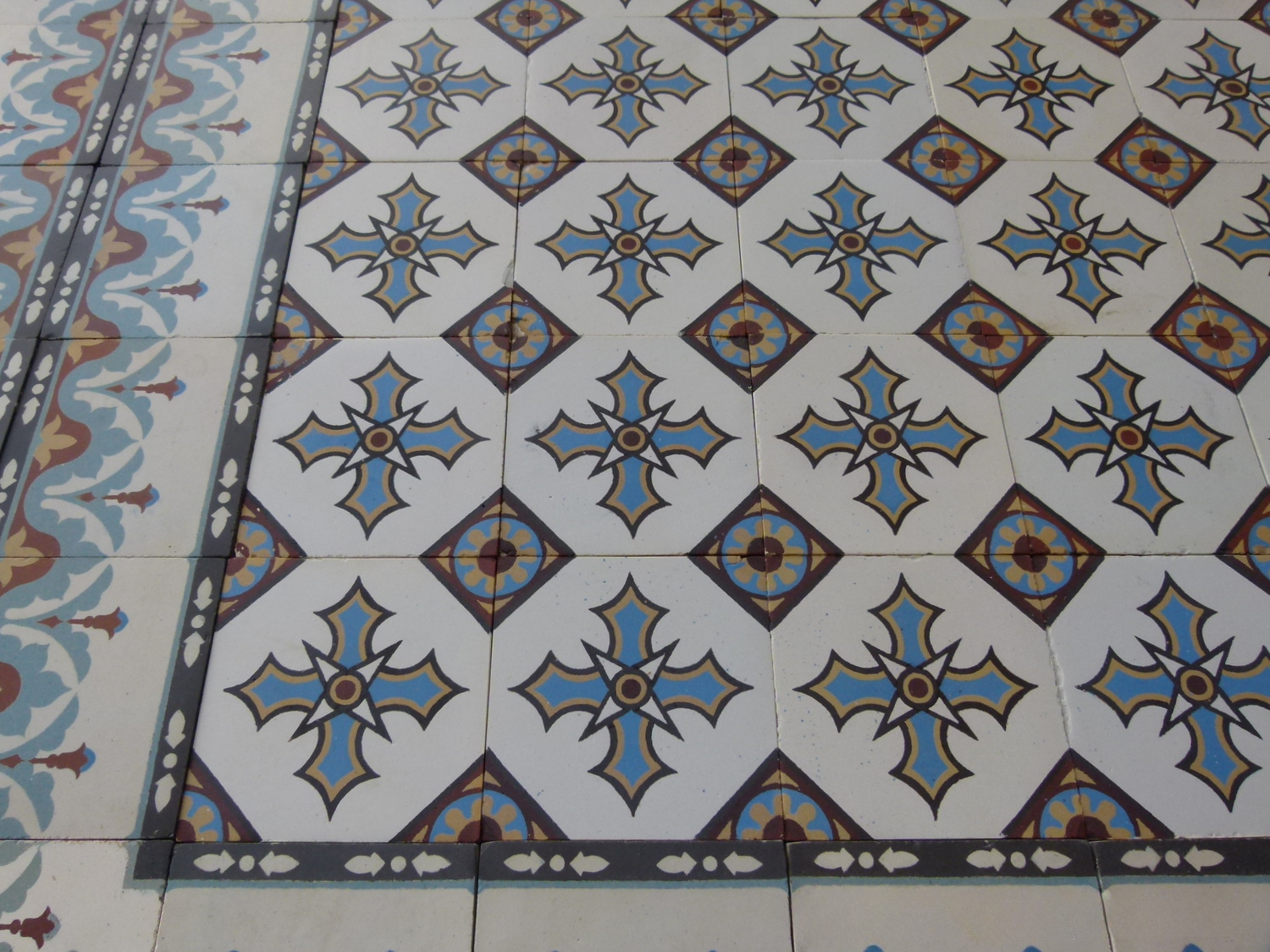
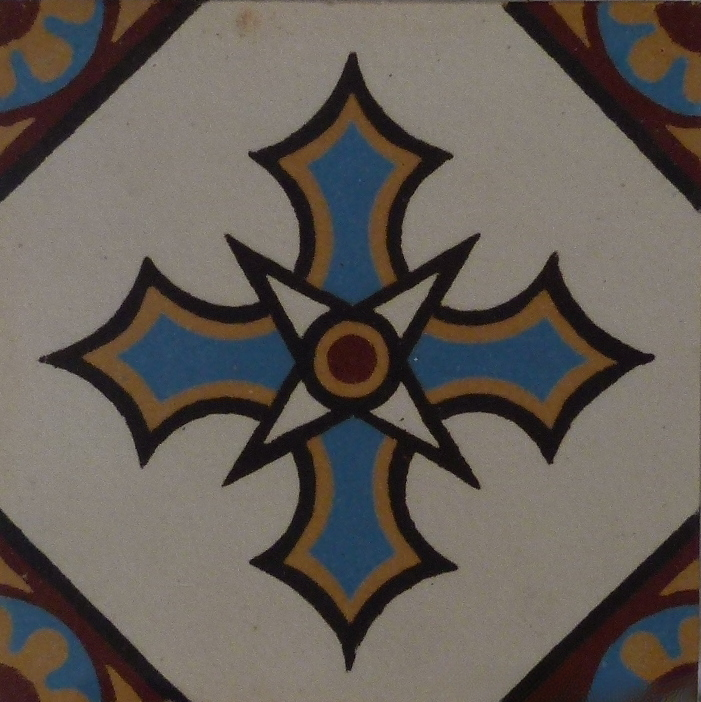
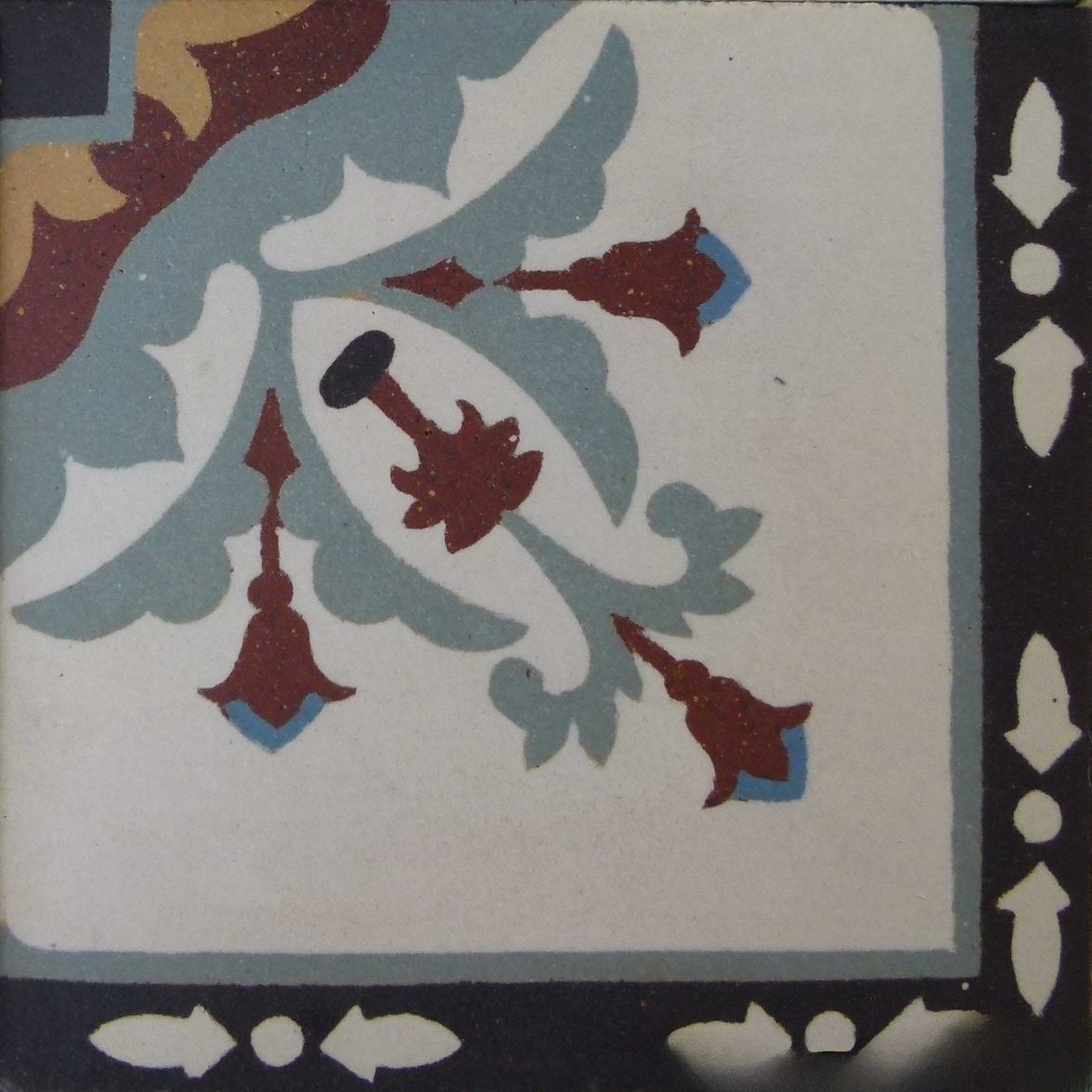
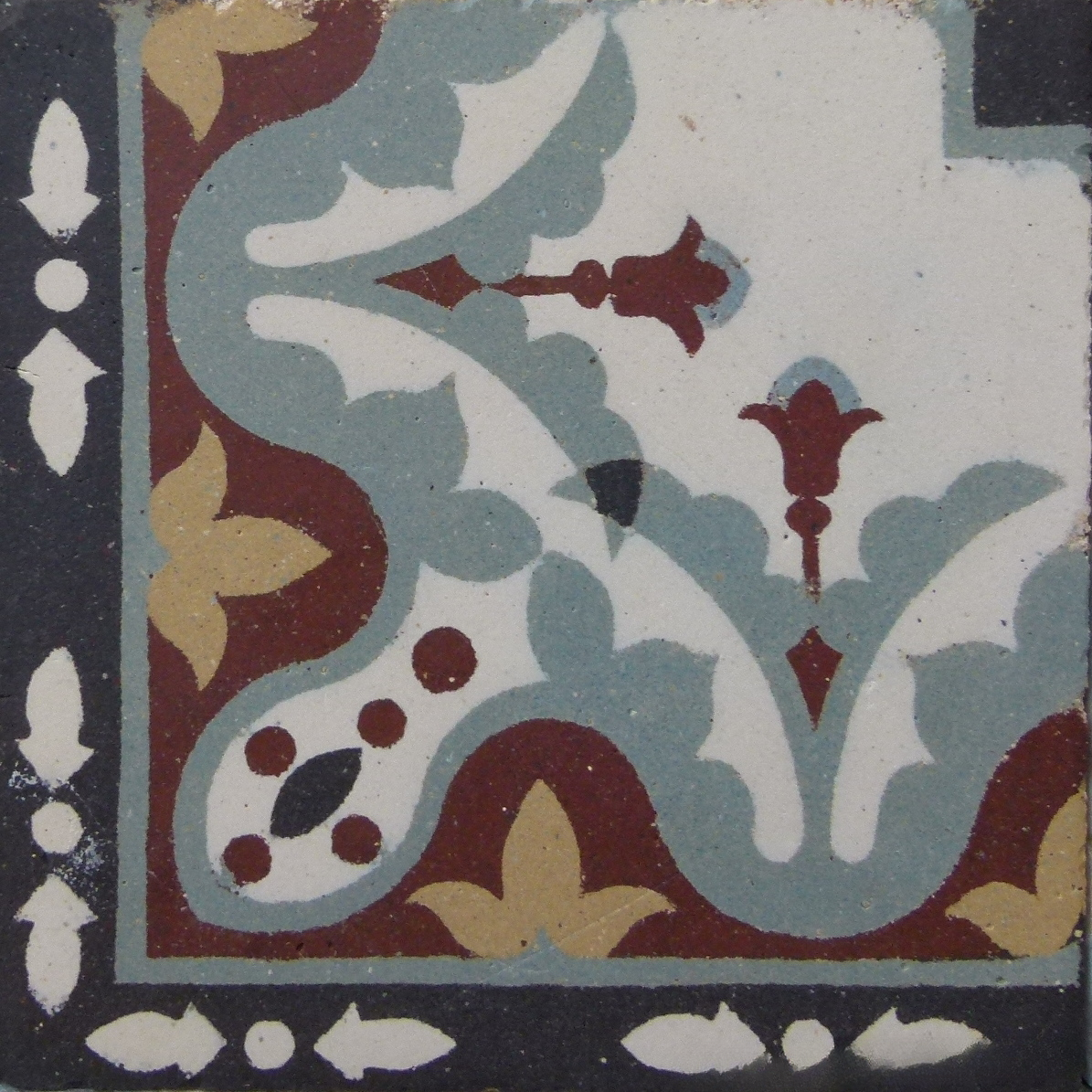
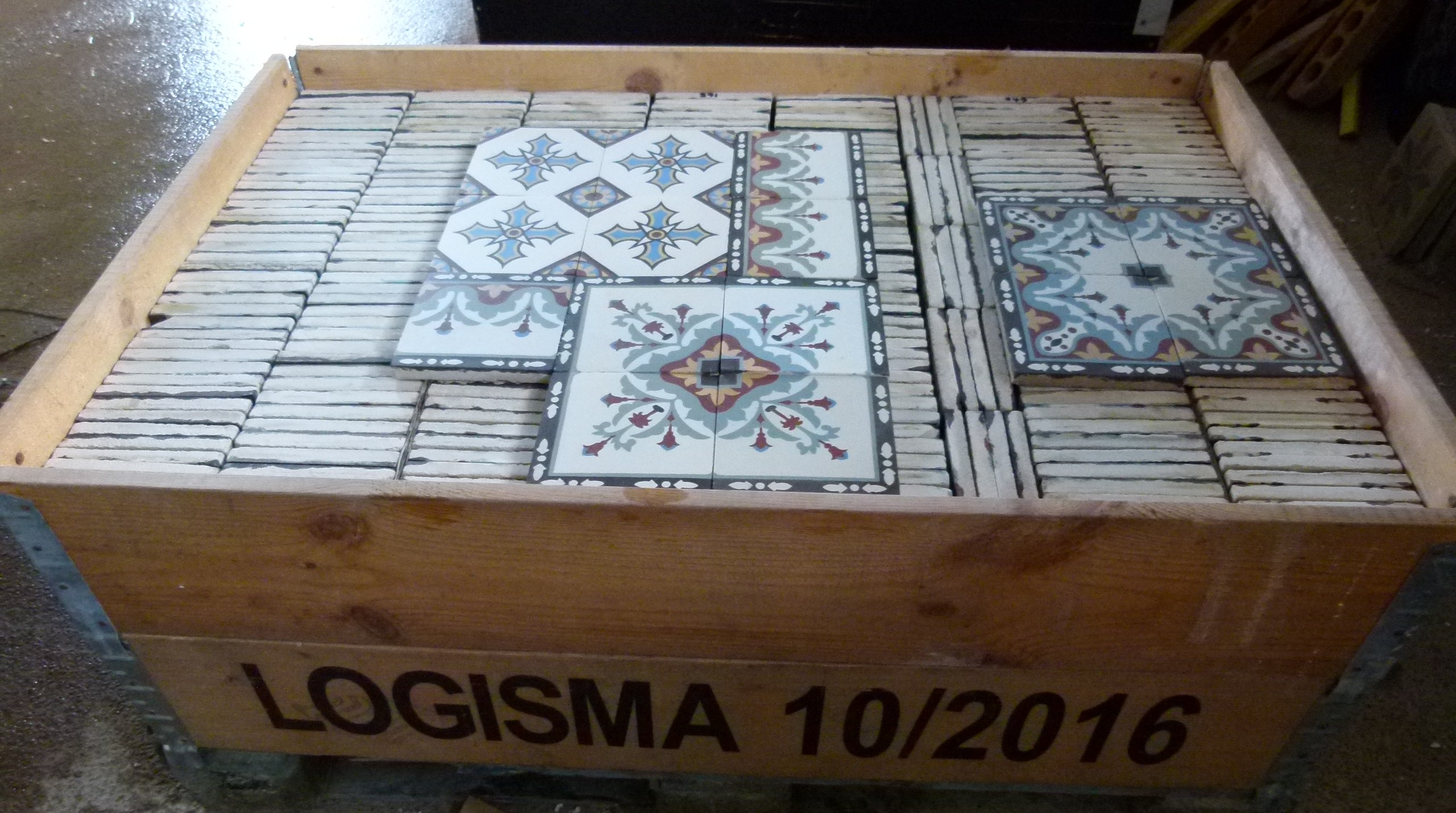
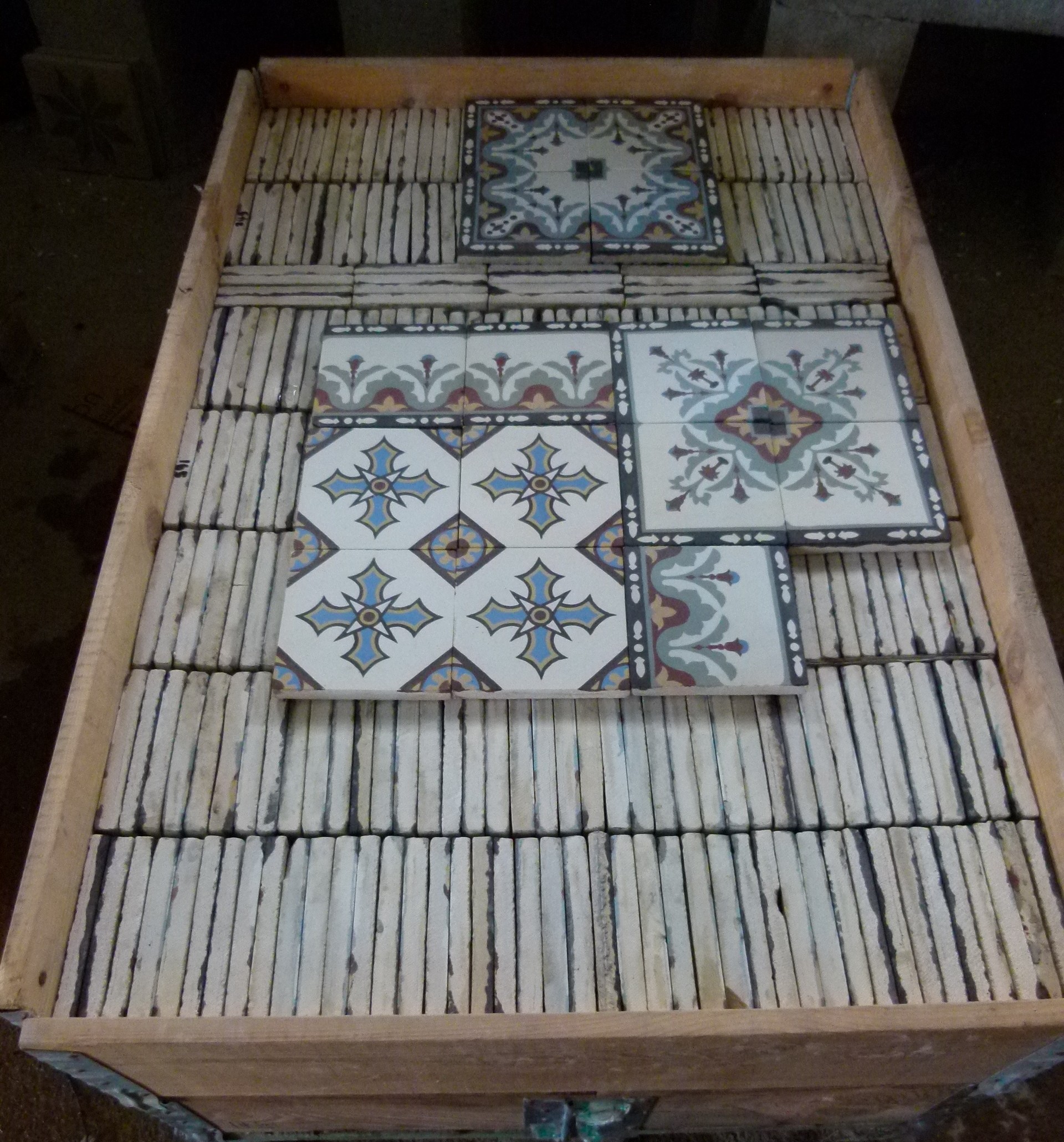
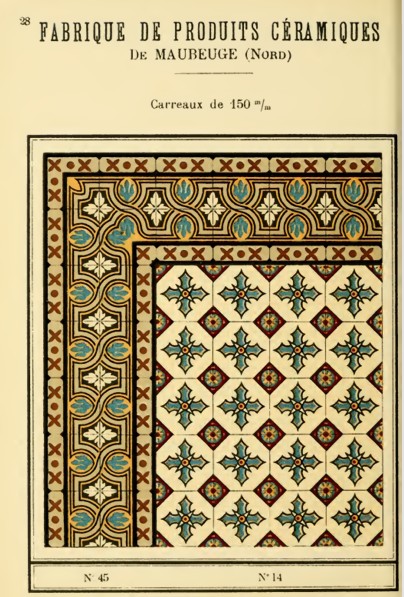
A beautifully composed early 20th century French ceramic floor extending to approximately 158 sq ft, reclaimed from the Aisne region of northern France. The understated heraldic cross field tiles provide a calm and restrained centre, allowing the richly detailed mirrored borders to take visual prominence — much like an ornate gilded frame surrounding a canvas.
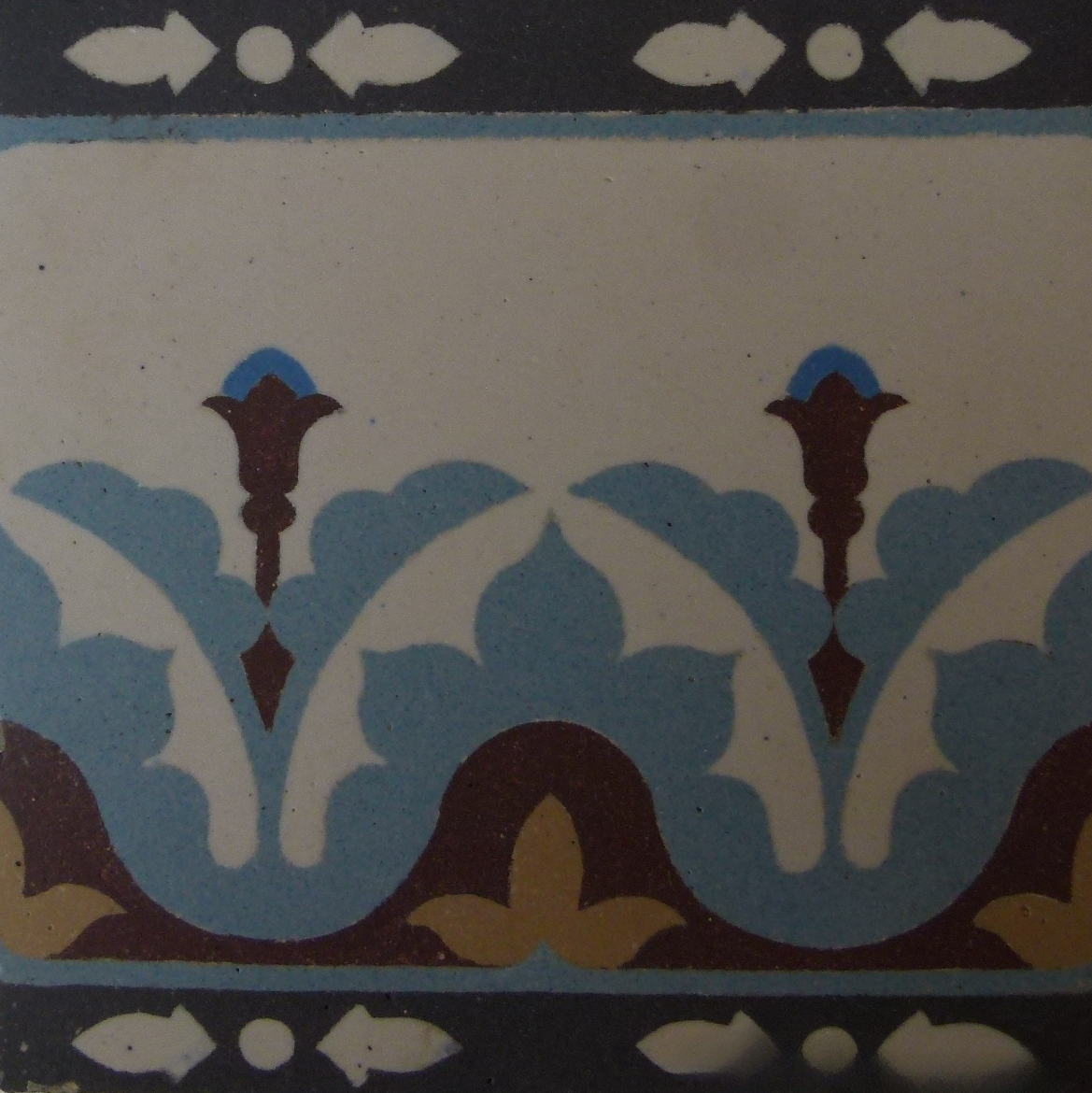
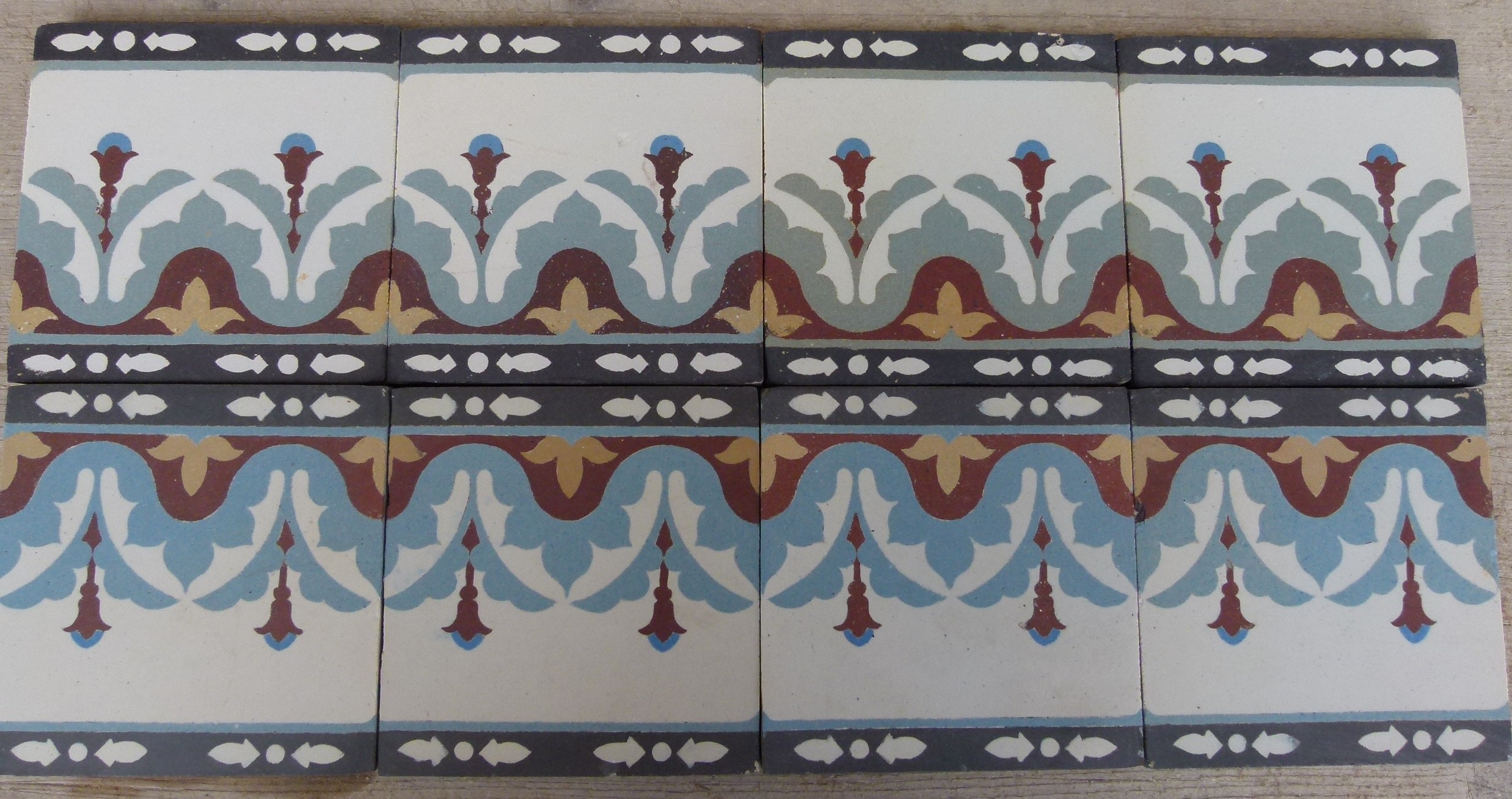
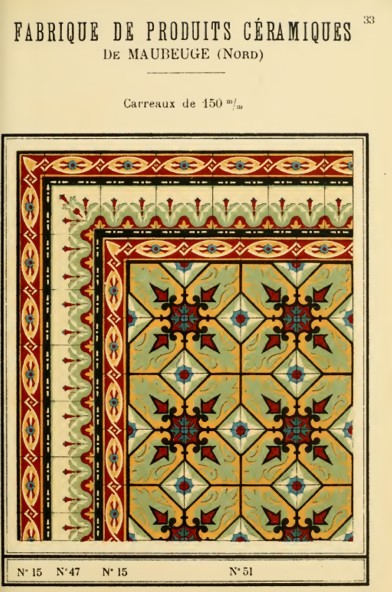
Produced by the Fabriques de Produits Céramiques de Maubeuge, the floor reflects the refined decorative traditions associated with northern France’s great ceramic manufacturers. The duplicated back-to-back borders create a particularly lush architectural effect, adding depth, rhythm and movement around the simpler central field.
The 5.9 inch square handmade tiles have restored beautifully, revealing rich and consistent colour with only light age-related wear, including occasional small groutable chips and edge nibbles. All original internal and external border corners have been successfully reclaimed, preserving the integrity of the original layout. Owing to the handmade process of producing the tiles in small batches there is some tonal variations observable, most notably on the border tiles and photographs are in the gallery showing this.
At approximately 0.6 inches thick and highly fired, these durable ceramics are suitable for both interior and exterior installation and remain an excellent example of classic French decorative tilework from the period.
Tile Quantities
- Field Tiles – 373 tiles – approximately 90.4 sq ft
- Large Border Tiles – 271 tiles plus 4 internal and 4 external corners – approximately 67 sq ft / 137 linear ft*
* Linear coverage halves when laid in the original back-to-back border formation.
More details are available on request.
Note:-
Our antique tiles were originally handmade in single or two tile molds. Pre-computer fabrication these molds were machined by hand & the colour slips to create the tile were mixed by measure and eye. When firing the tiles, the kiln temperatures of c.1,100F degrees could also be variable. The result of this production process is that tiles made during this period of non-automation often display subtle size & thickness variations and there can be tonal variations in colors, all of which add to their charm and uniqueness. When photographing a floor, we always take a random section so that it is representative of the whole in tones and patina.
A rigorous quality control during the restoration process will include in the sale any tiles with groutable small chips and edge nibbles, expected of tiles more than 100 years old, but include for free any with larger defaults as rejects, which the tiler can then use for offcuts.
Can we help?
If you can provide a technical drawing, or a simple sketch with key dimensions, we are happy to assist in evaluating and recommending the best layout of the floor in your area of choice. Click here for more details