
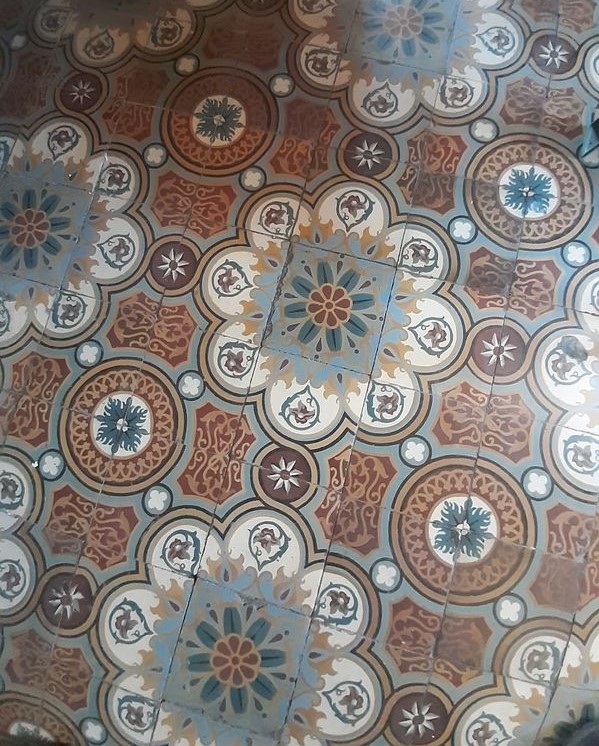
A 111 yr old French Ceramic with an Exceptional Patina
Currently in France and soon to be shipped to The French Antique Tile Company
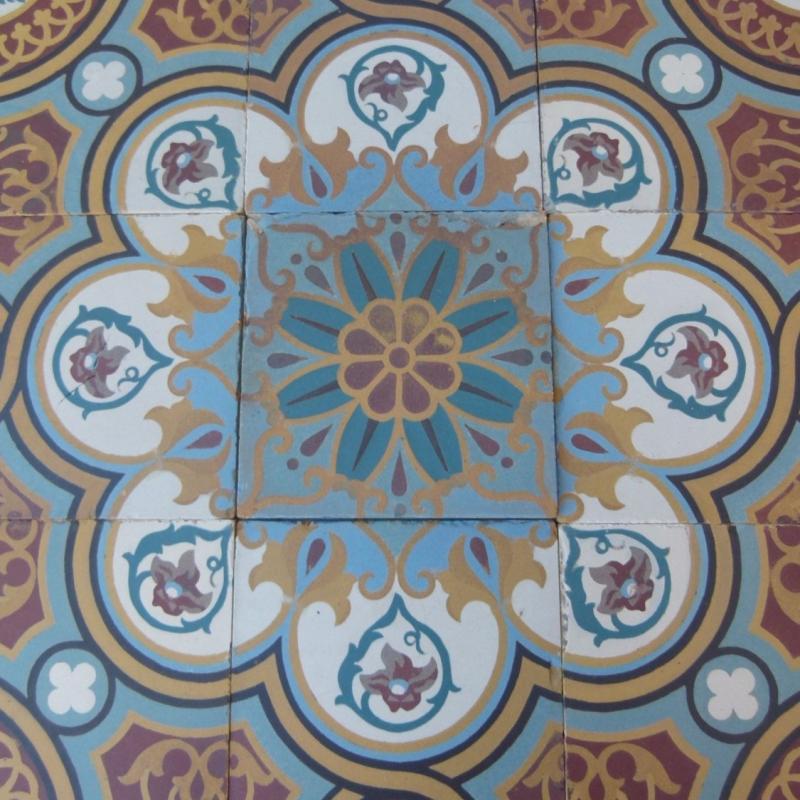
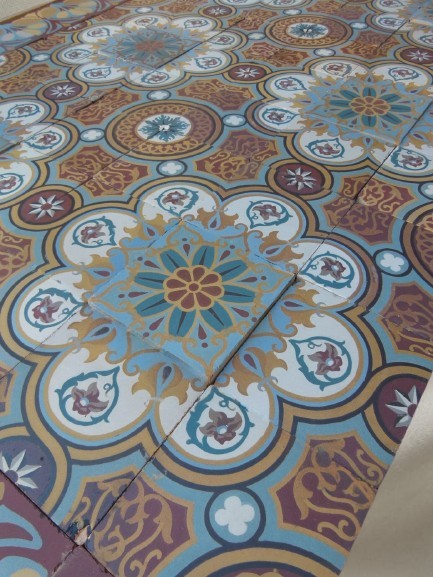
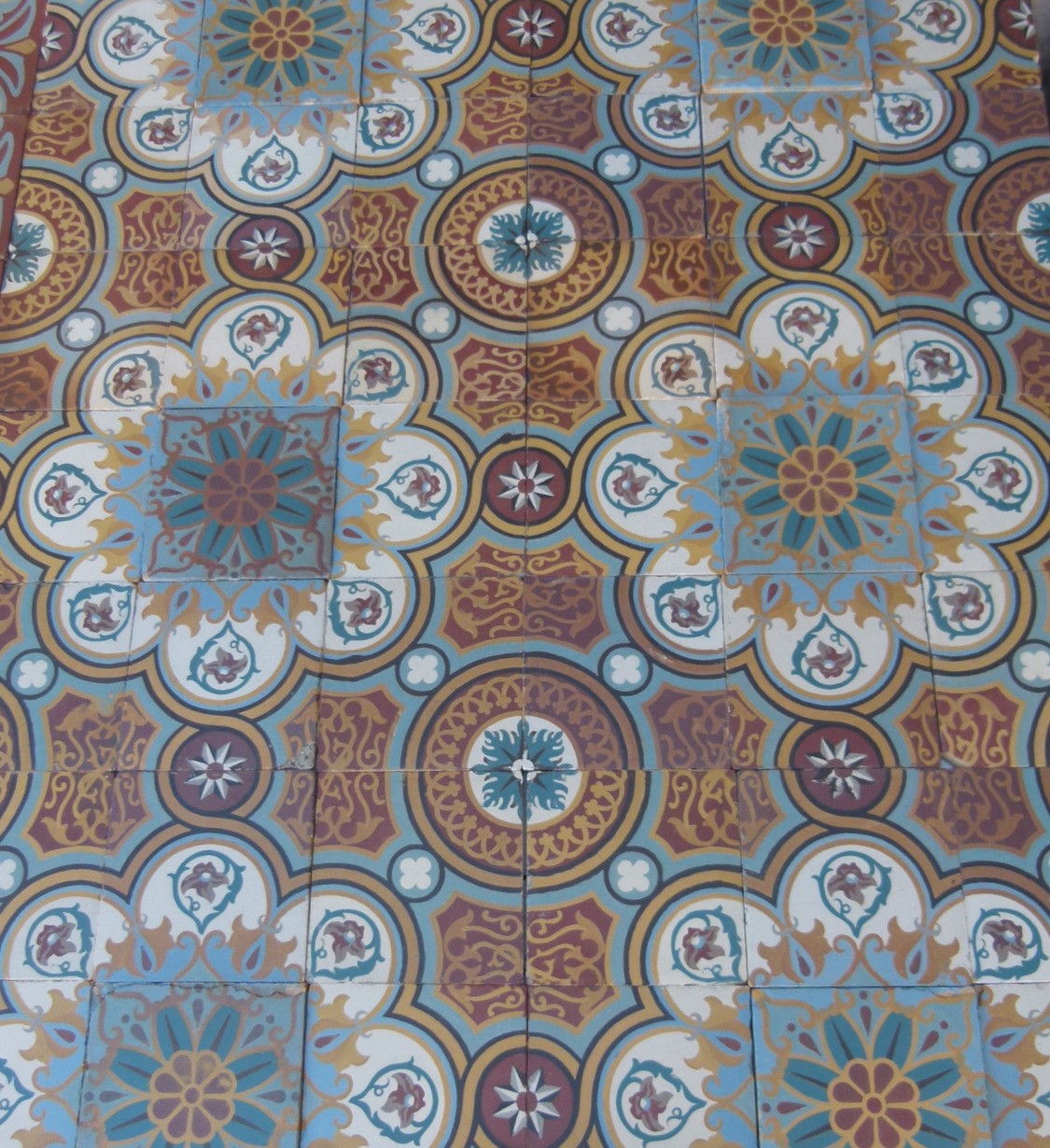
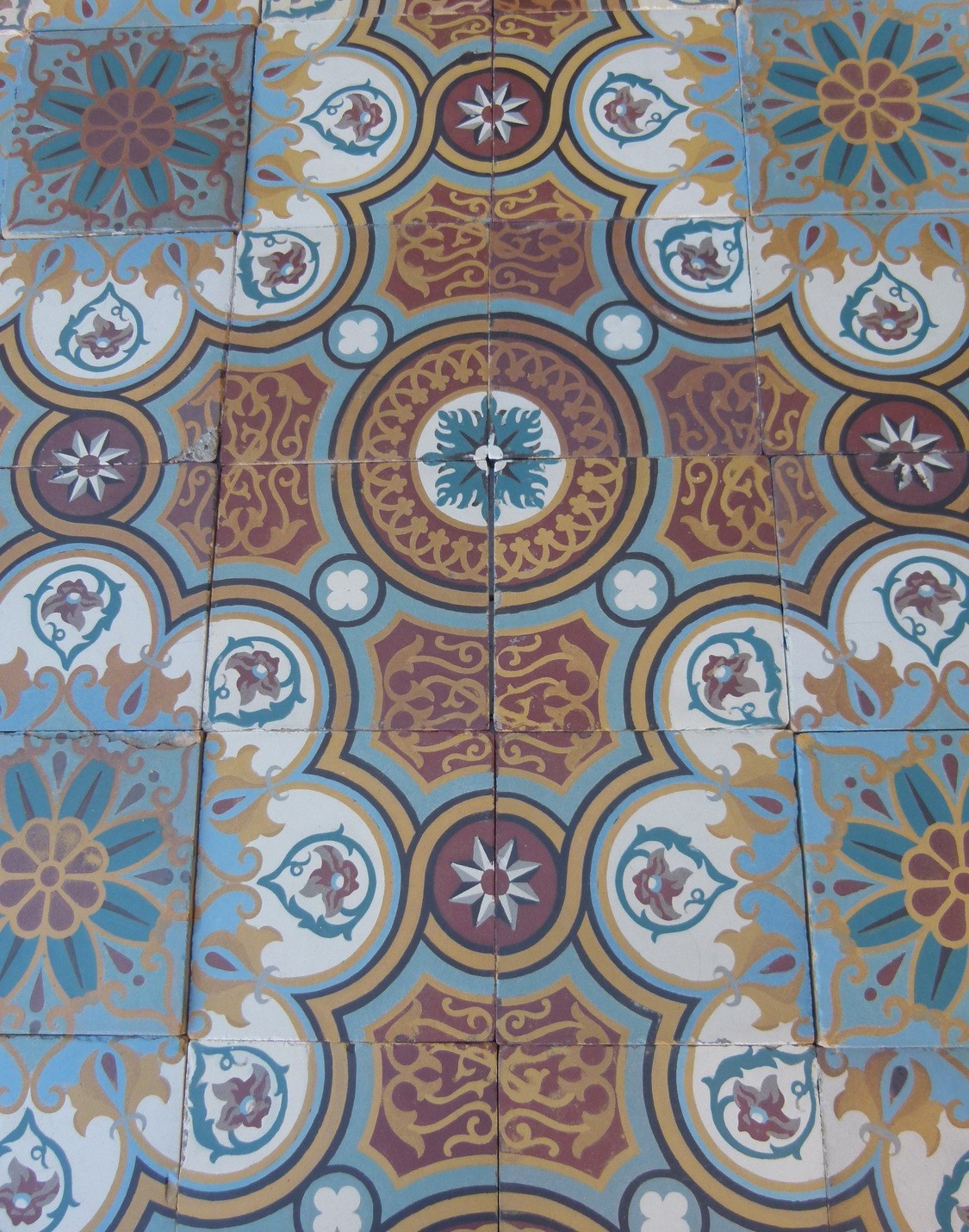
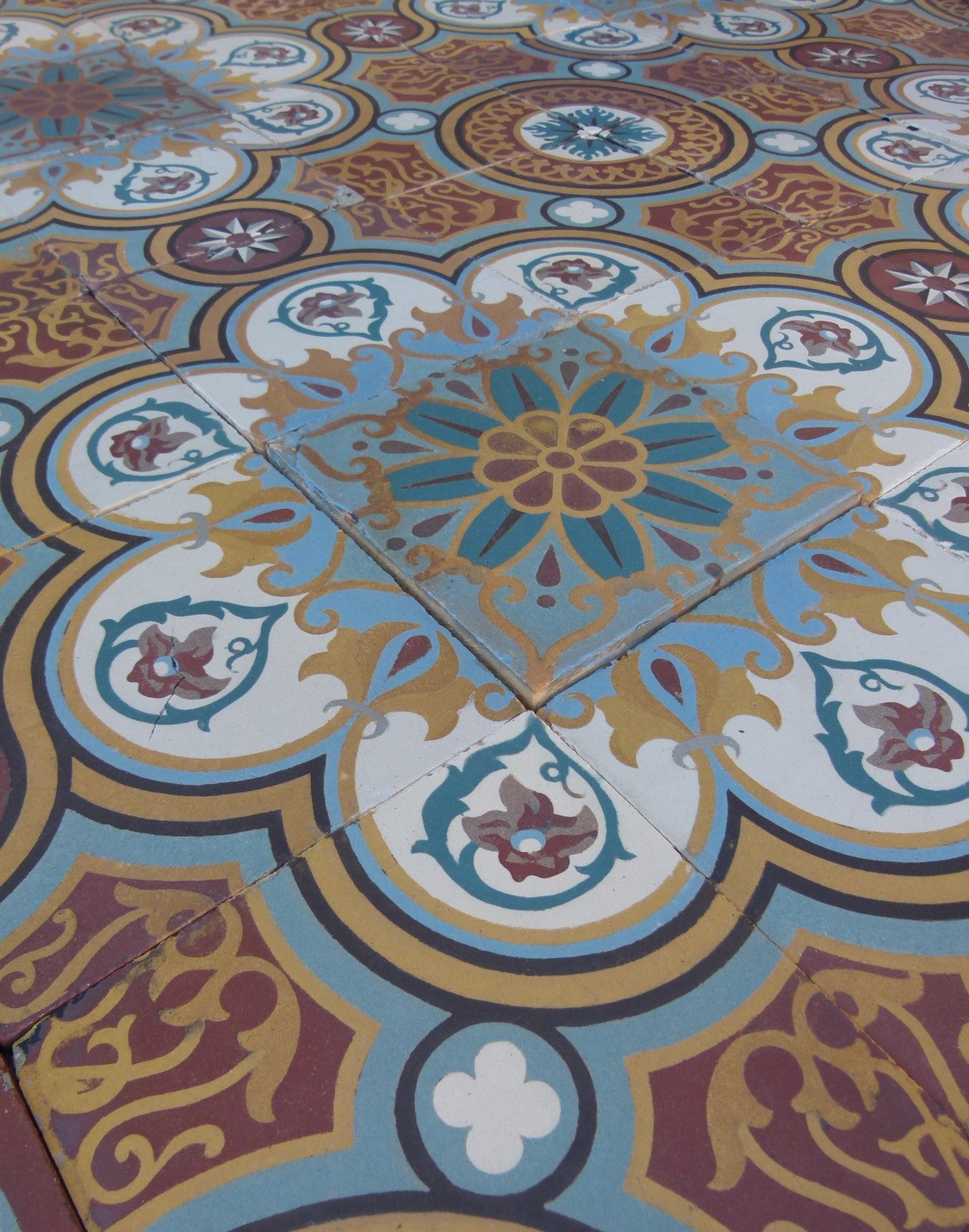
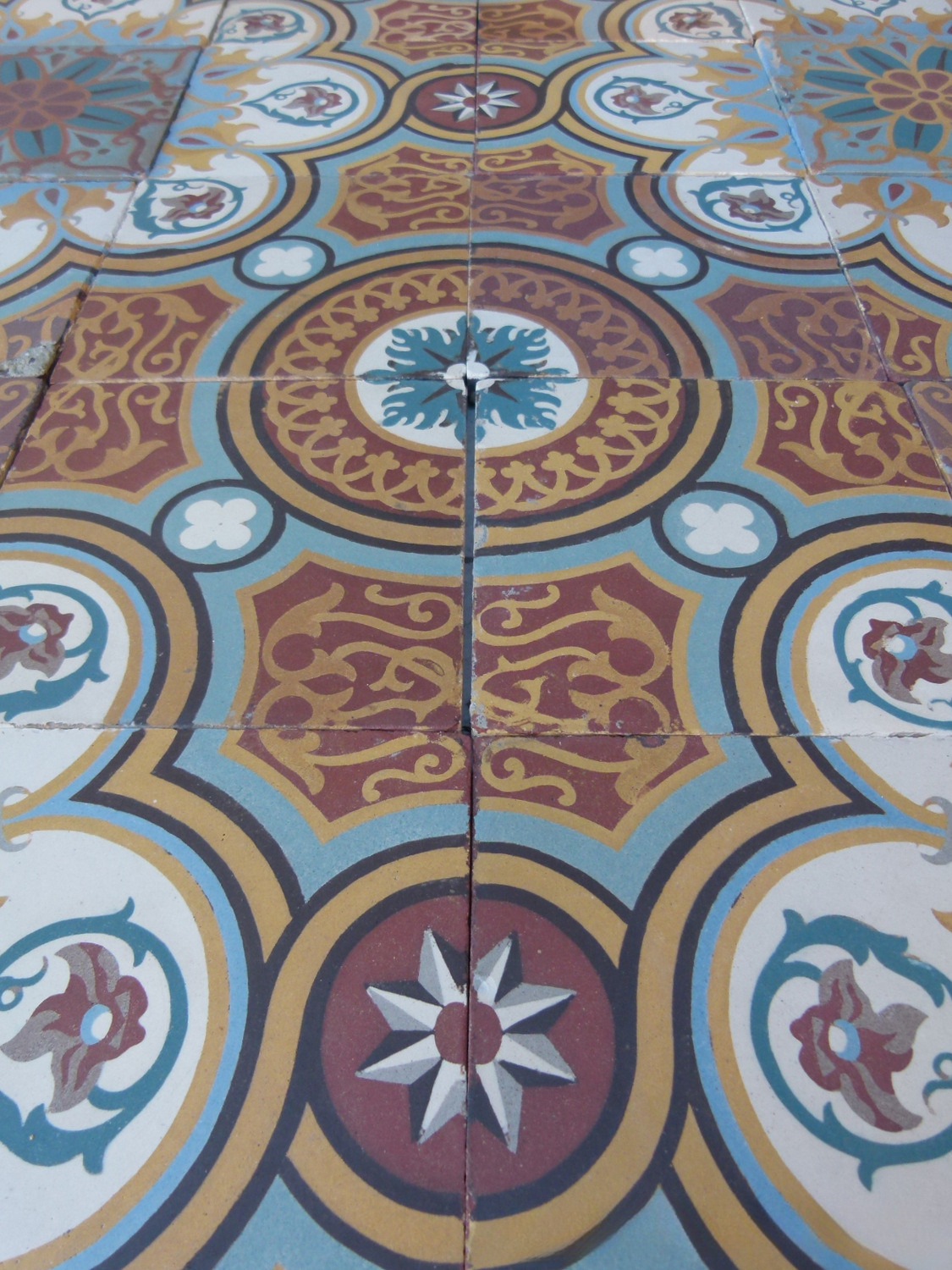
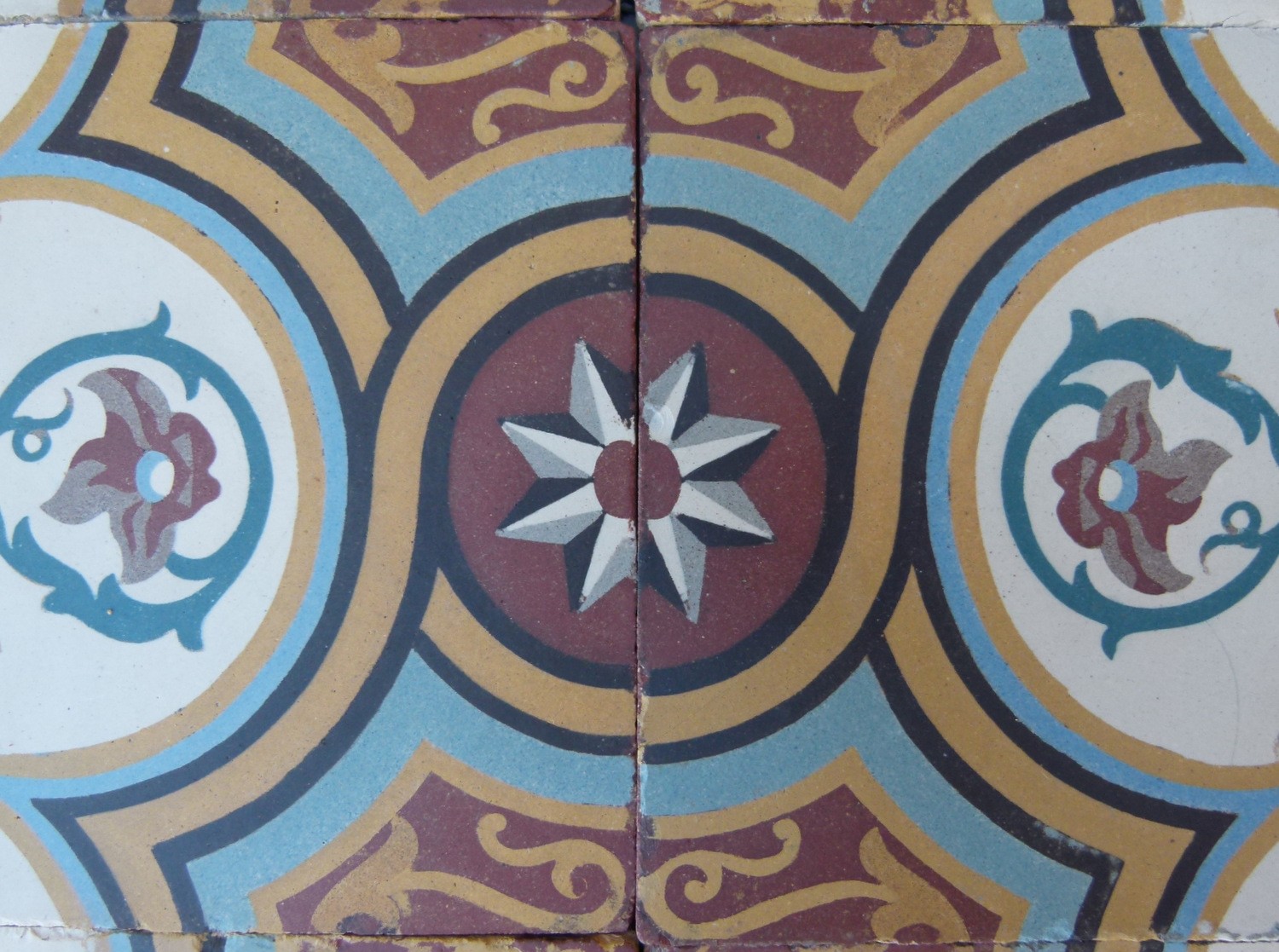
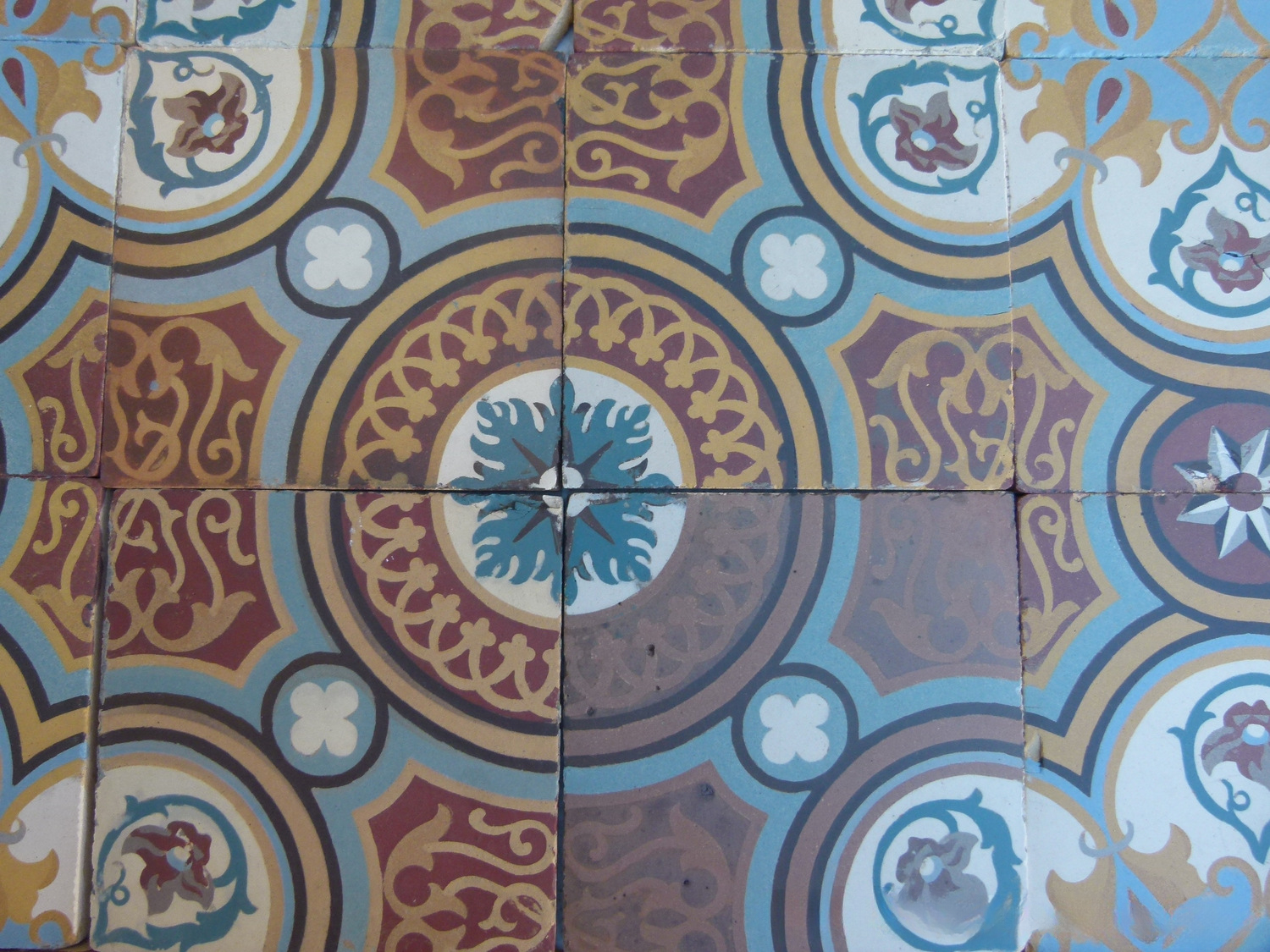
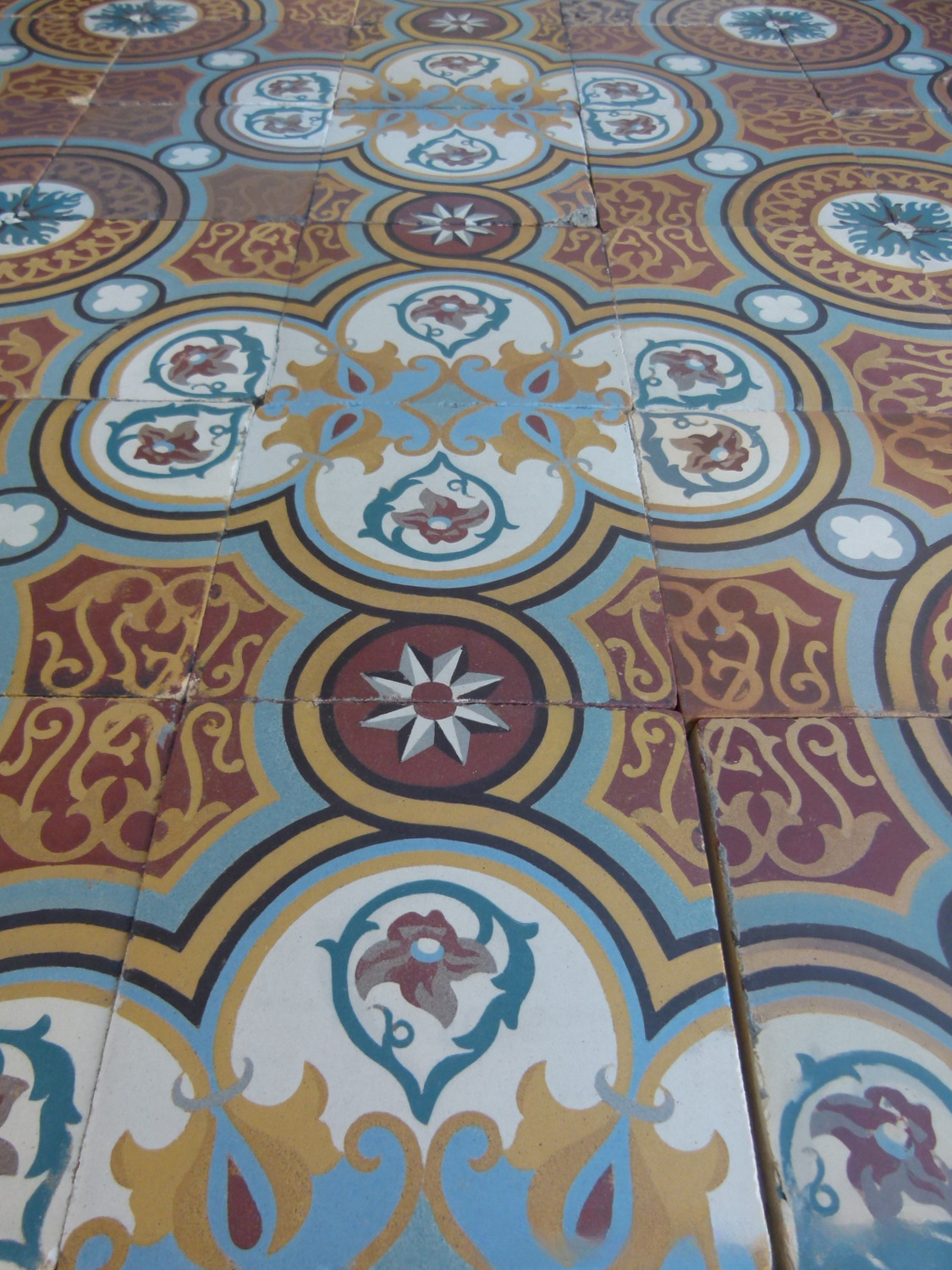
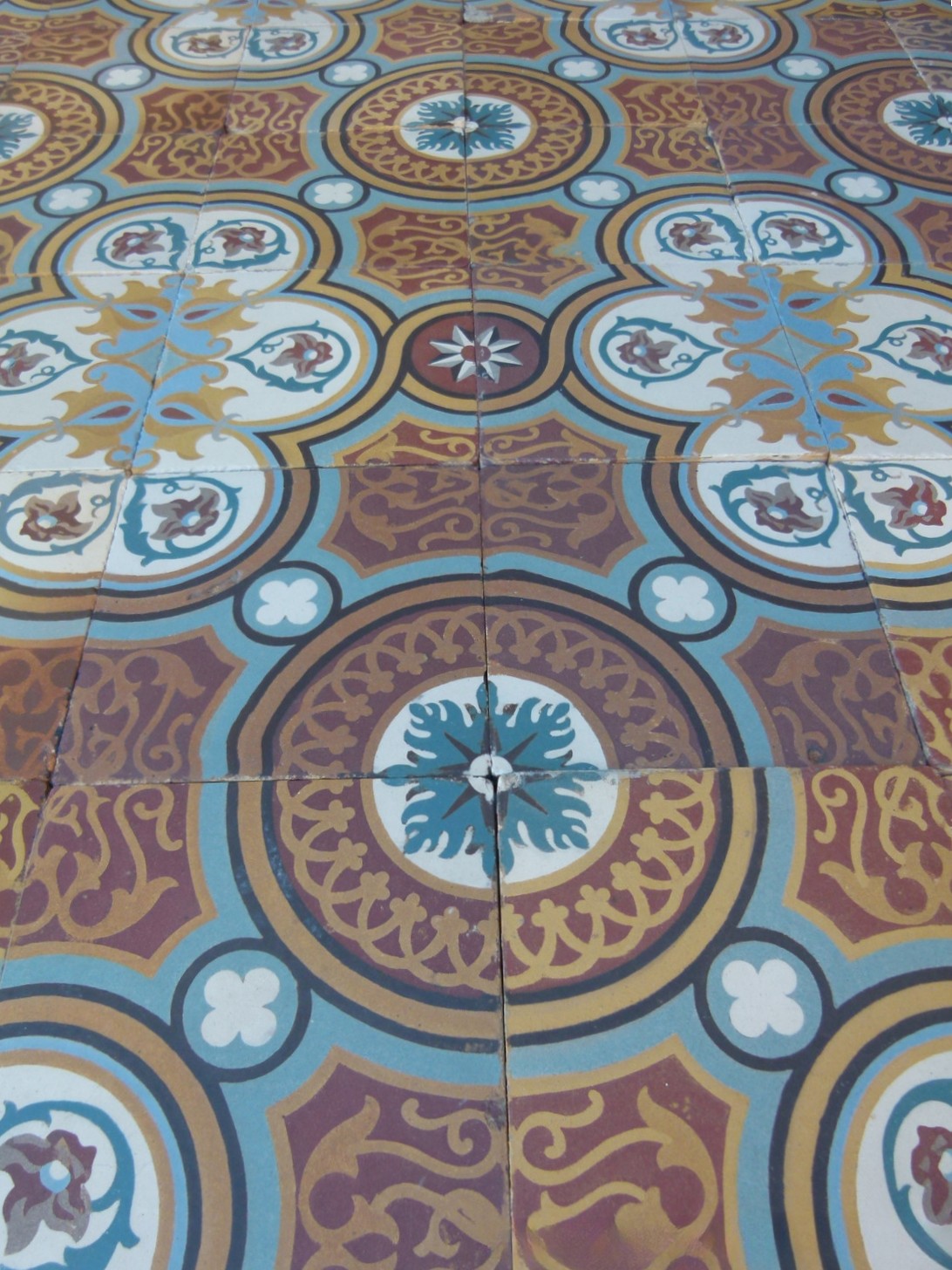
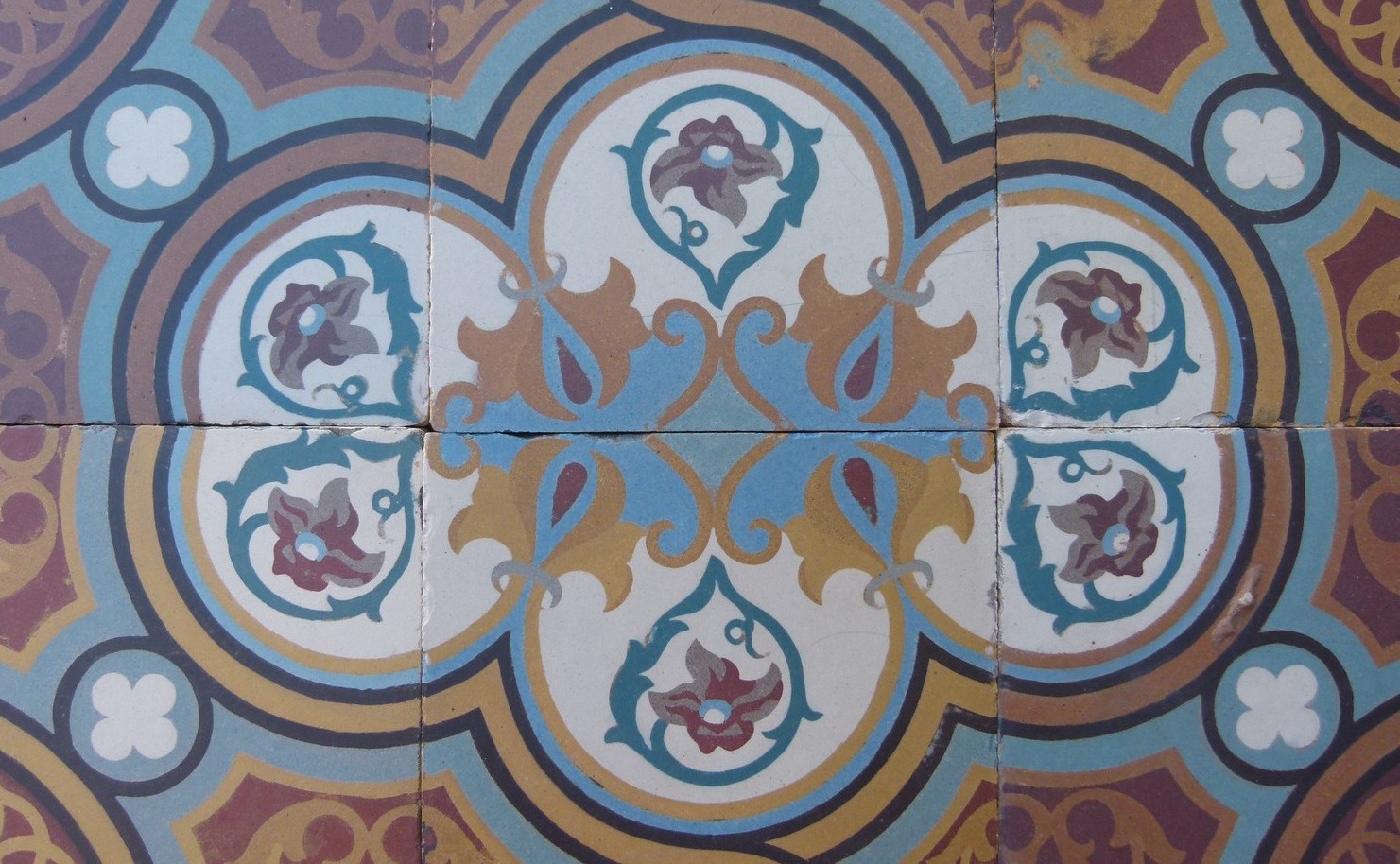
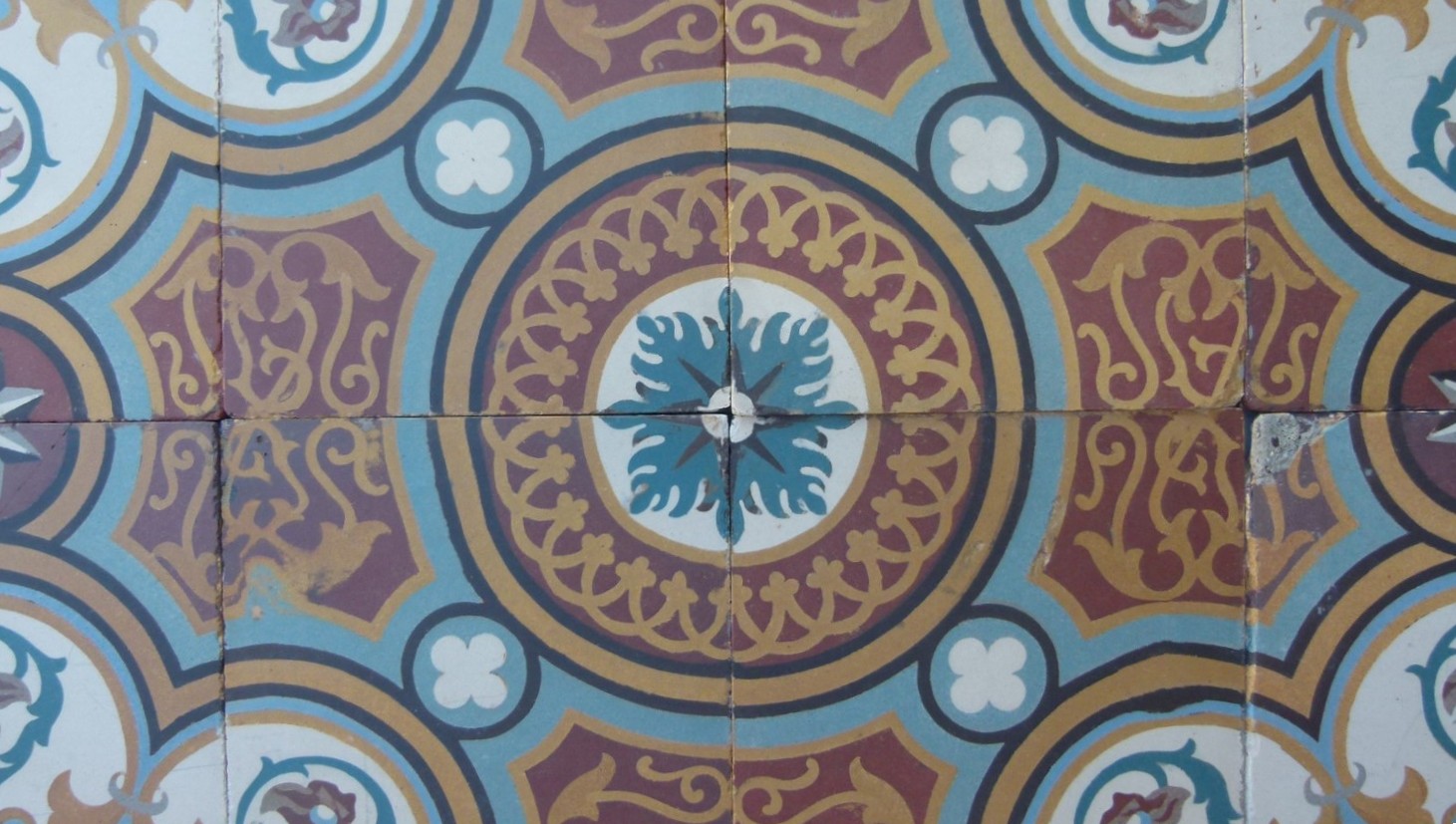
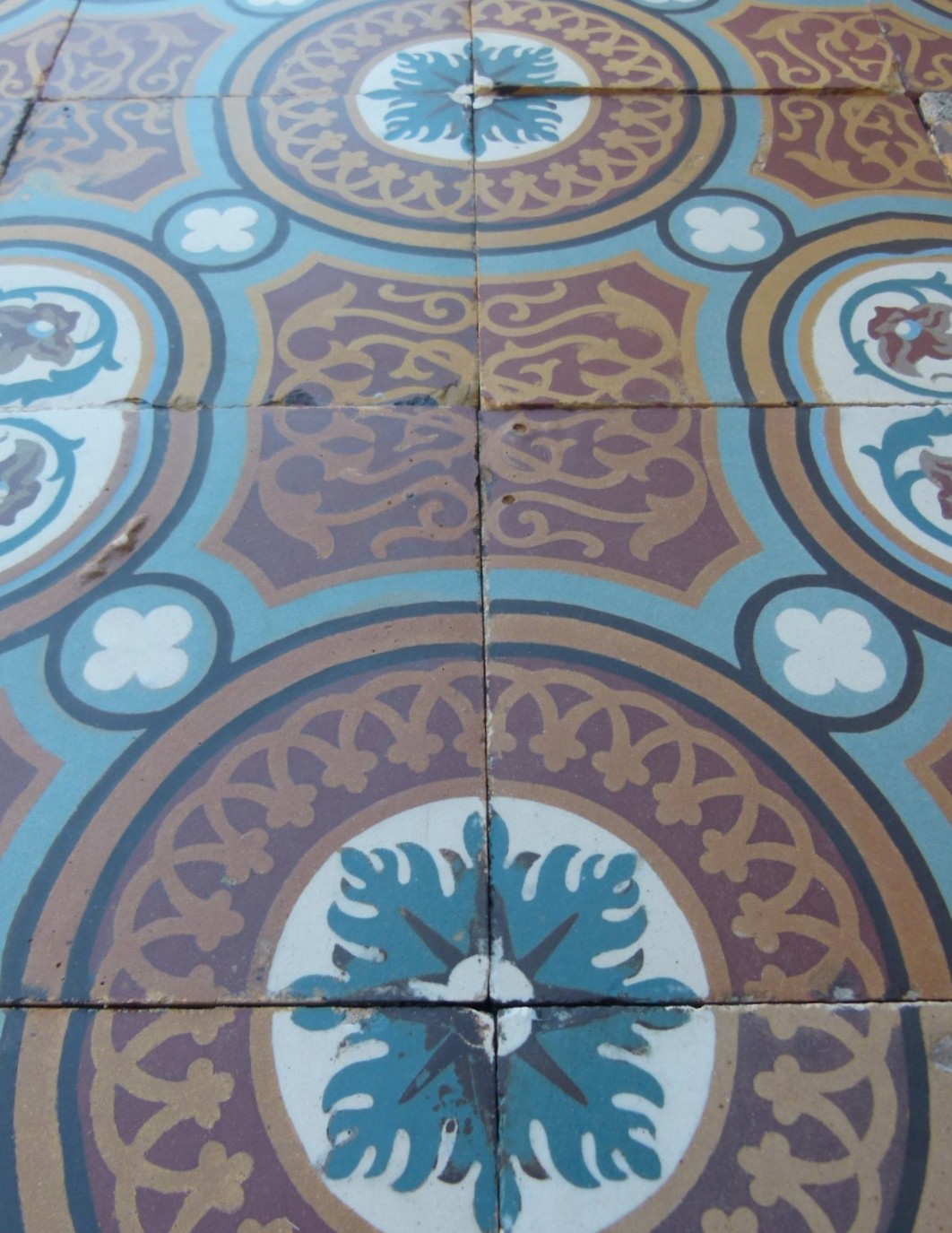
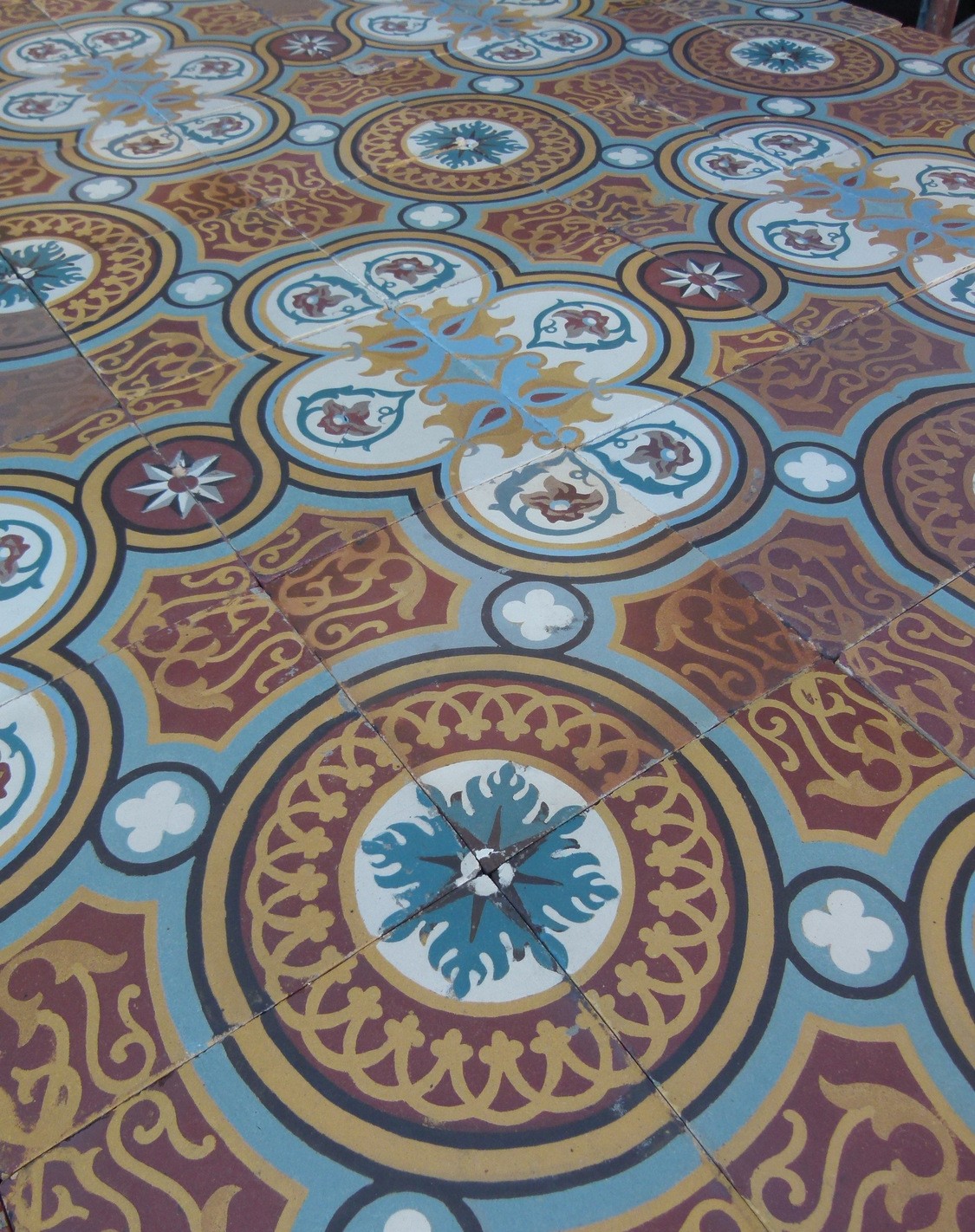
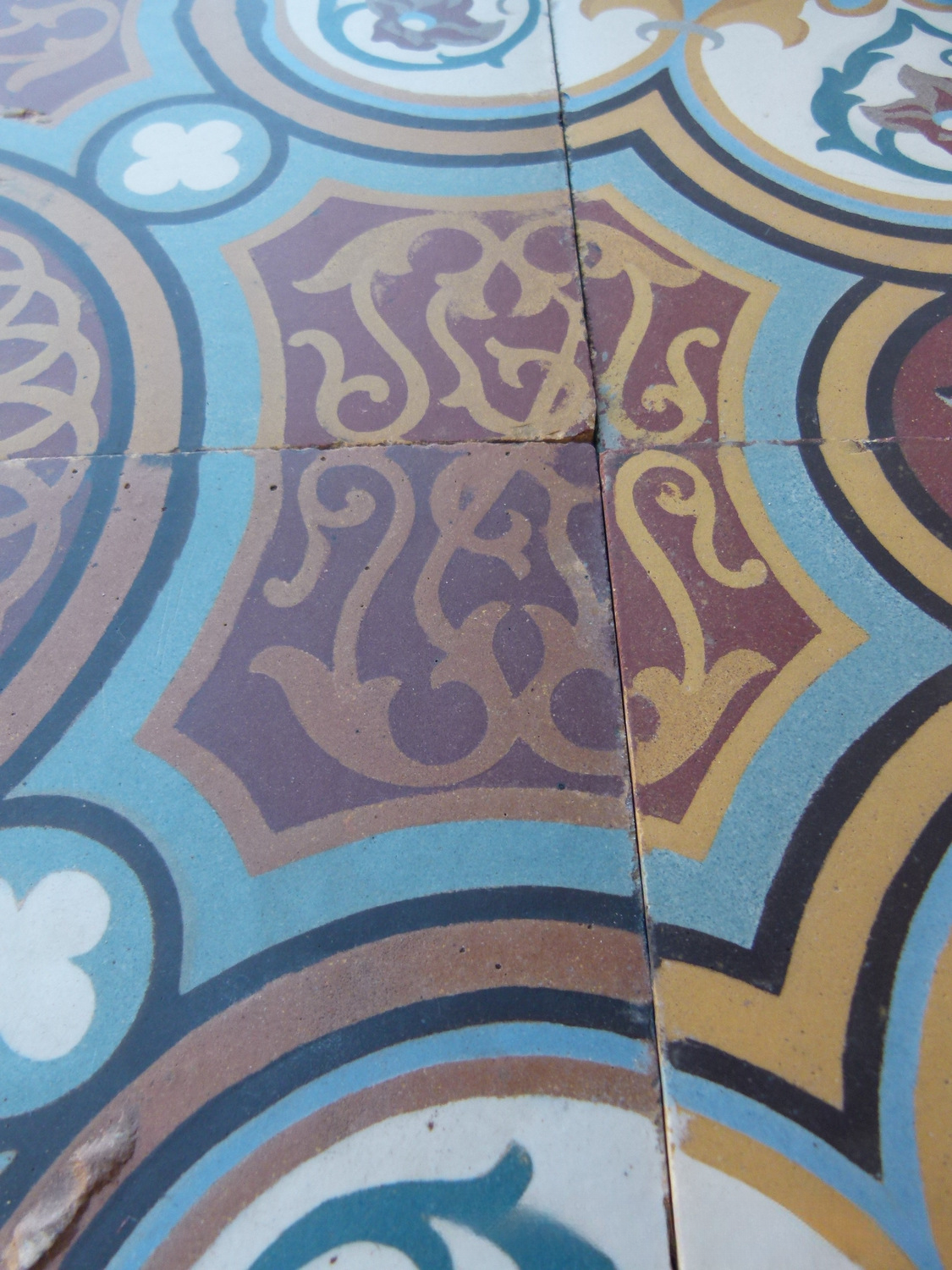
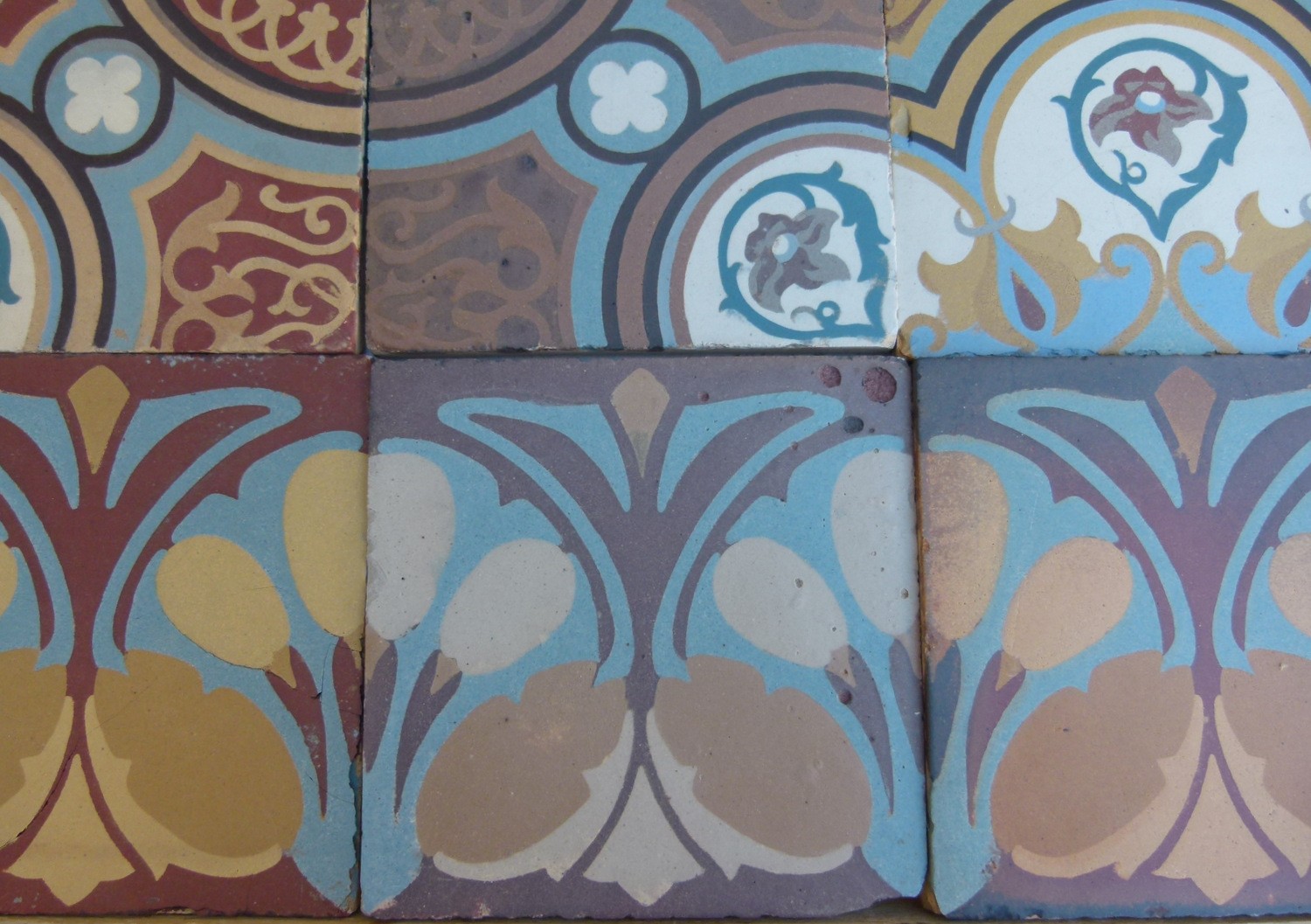
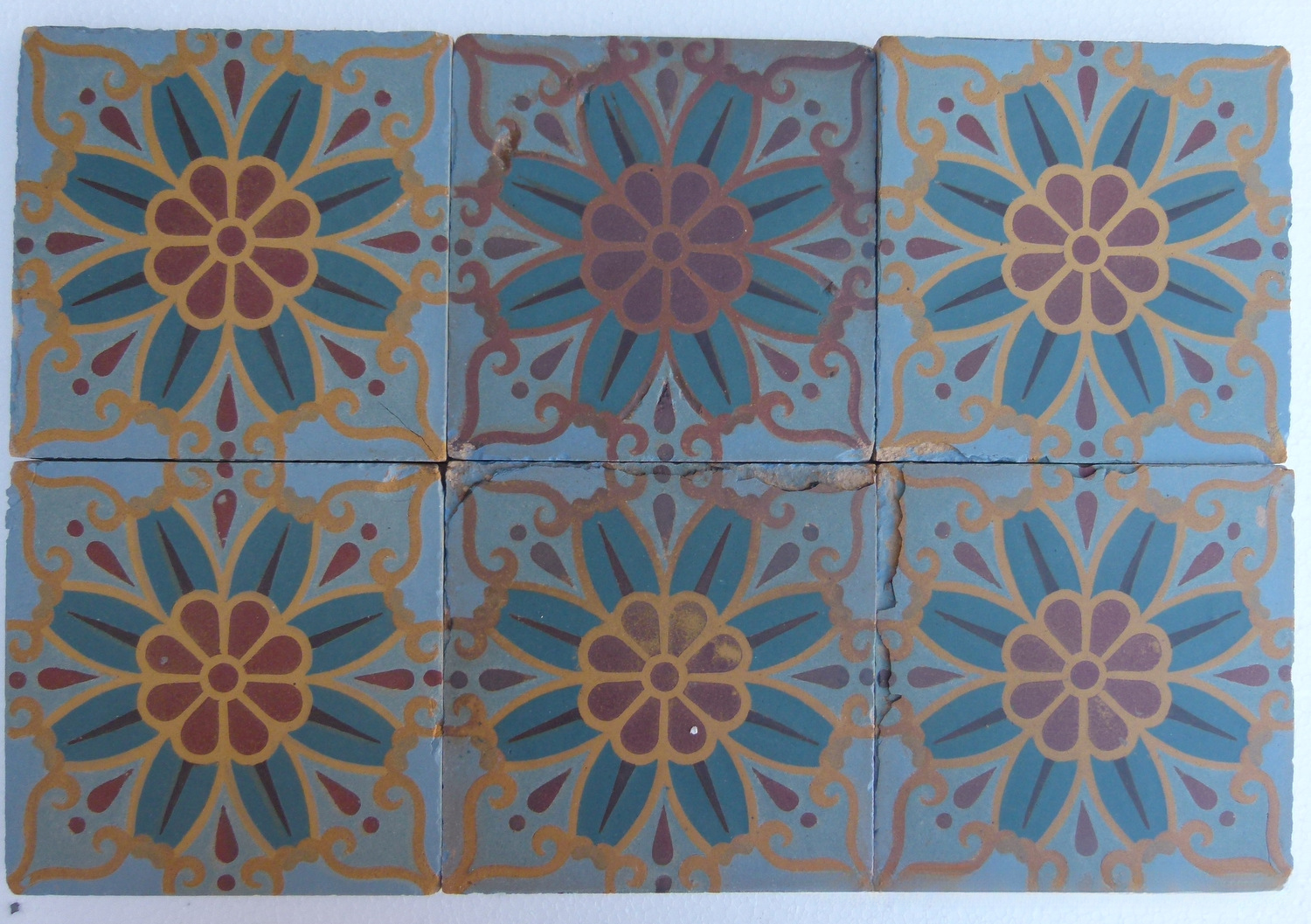
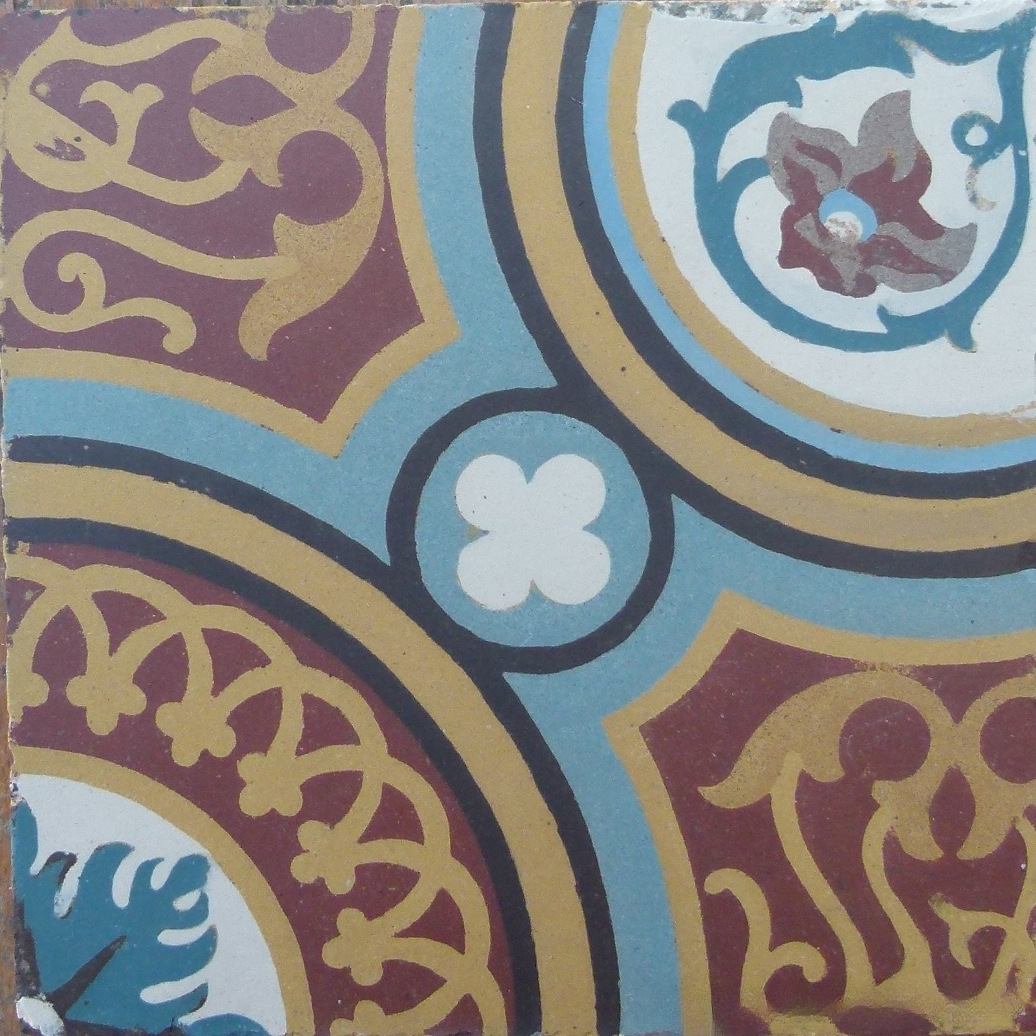
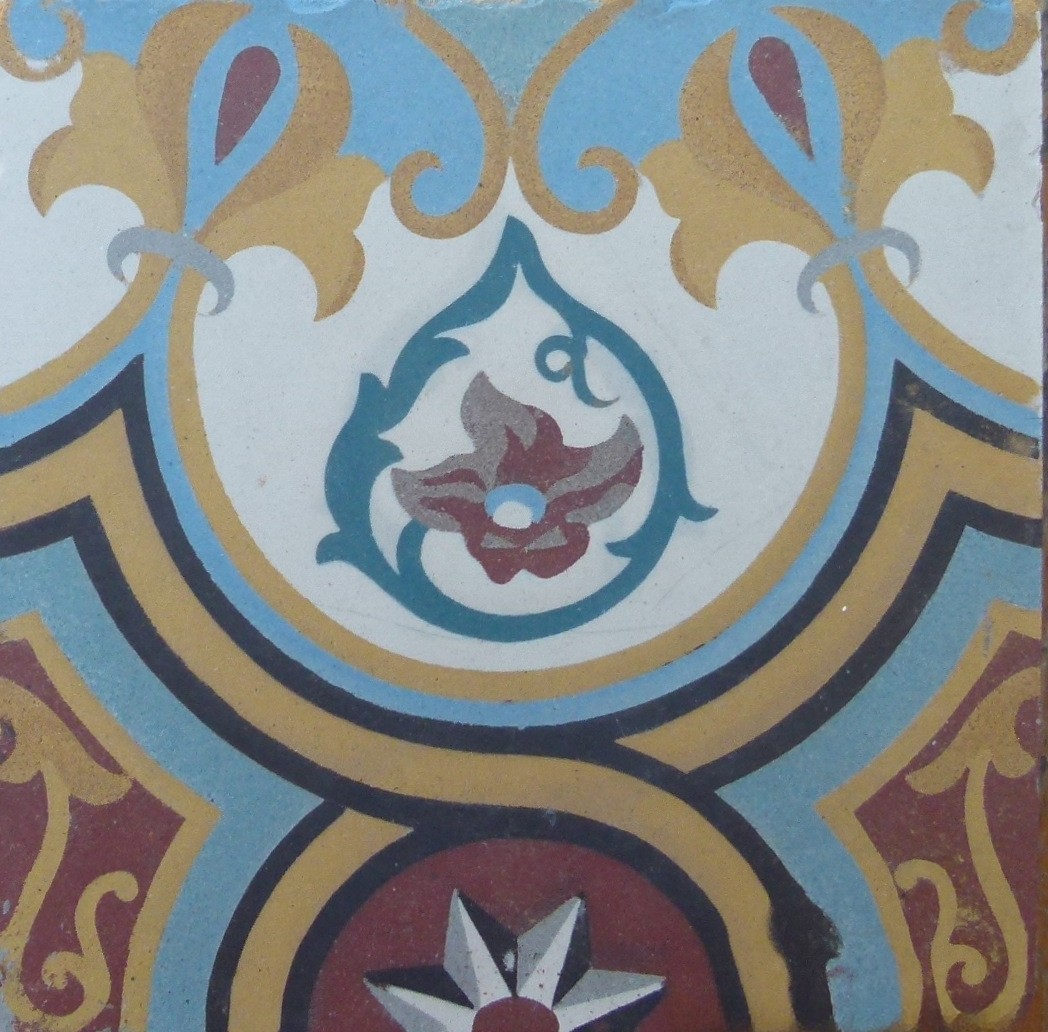
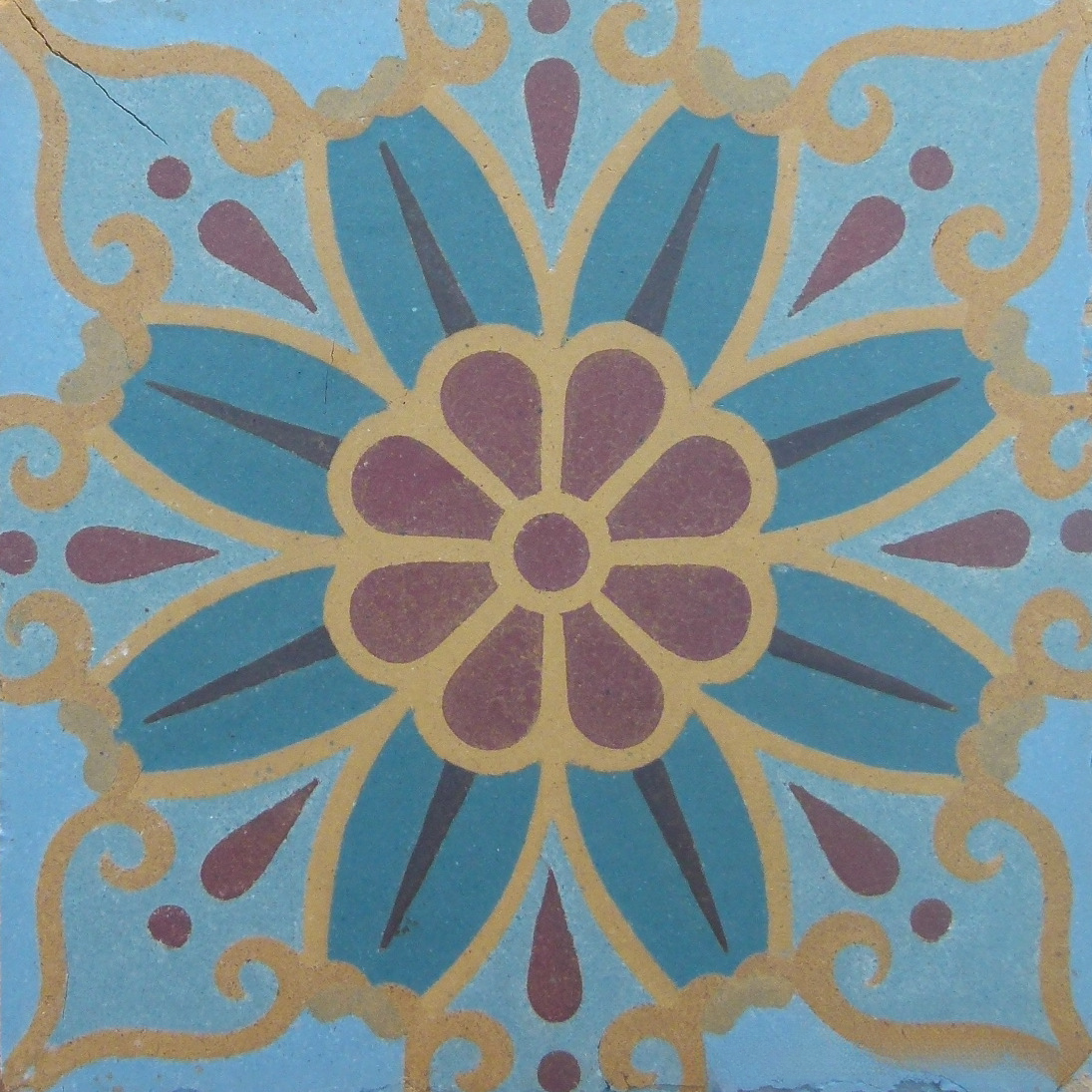
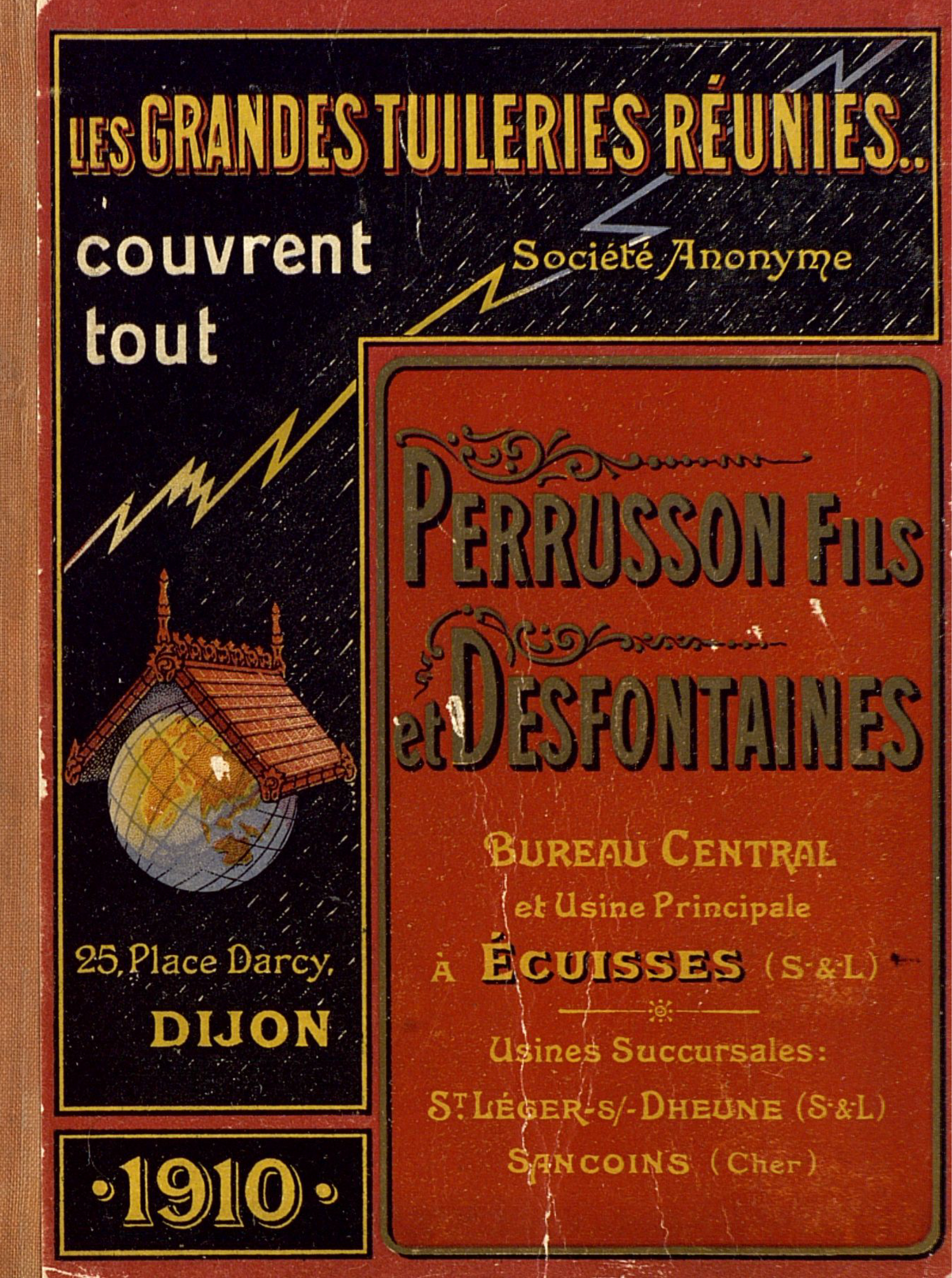
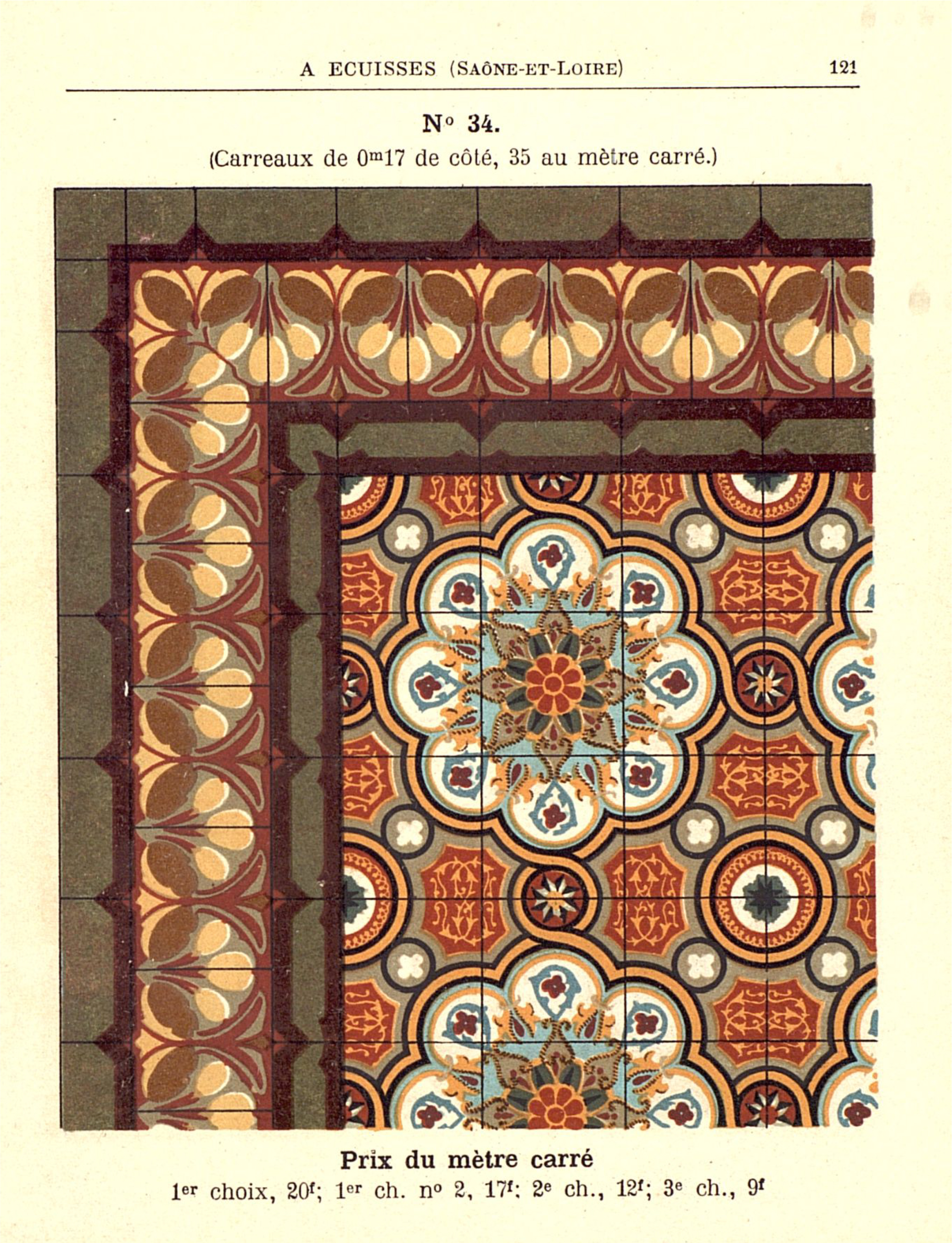
A characterful early 20th century French ceramic floor manufactured by Perrusson Fils Desfontaines Ecuisses, totalling approximately 187 sq ft and displaying the rich surface variation and warmth only period handmade ceramics can offer. For provenance the tiles appear in the manufacturers period catalogue of 1915, scans of which we include in the gallery.
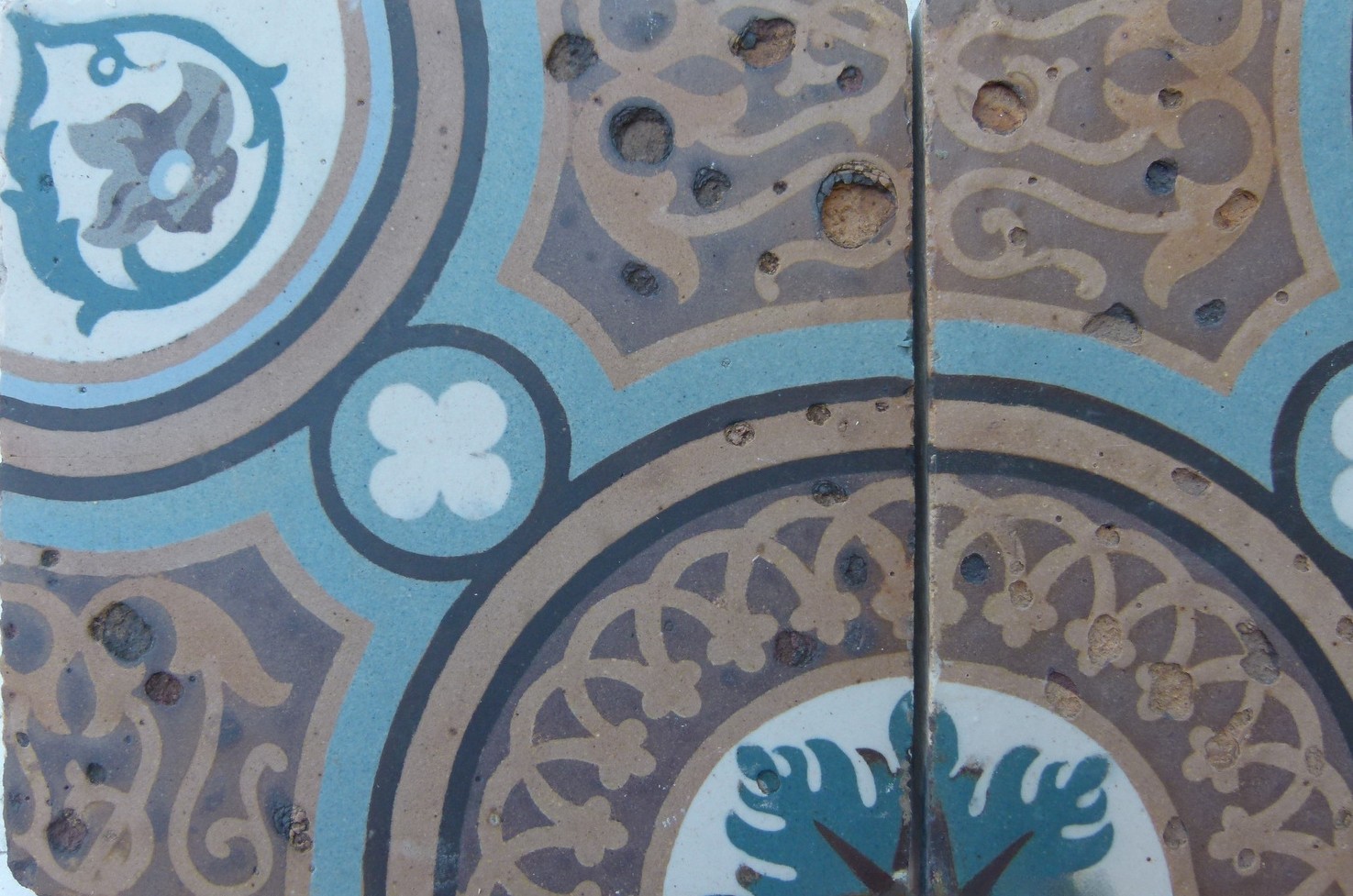
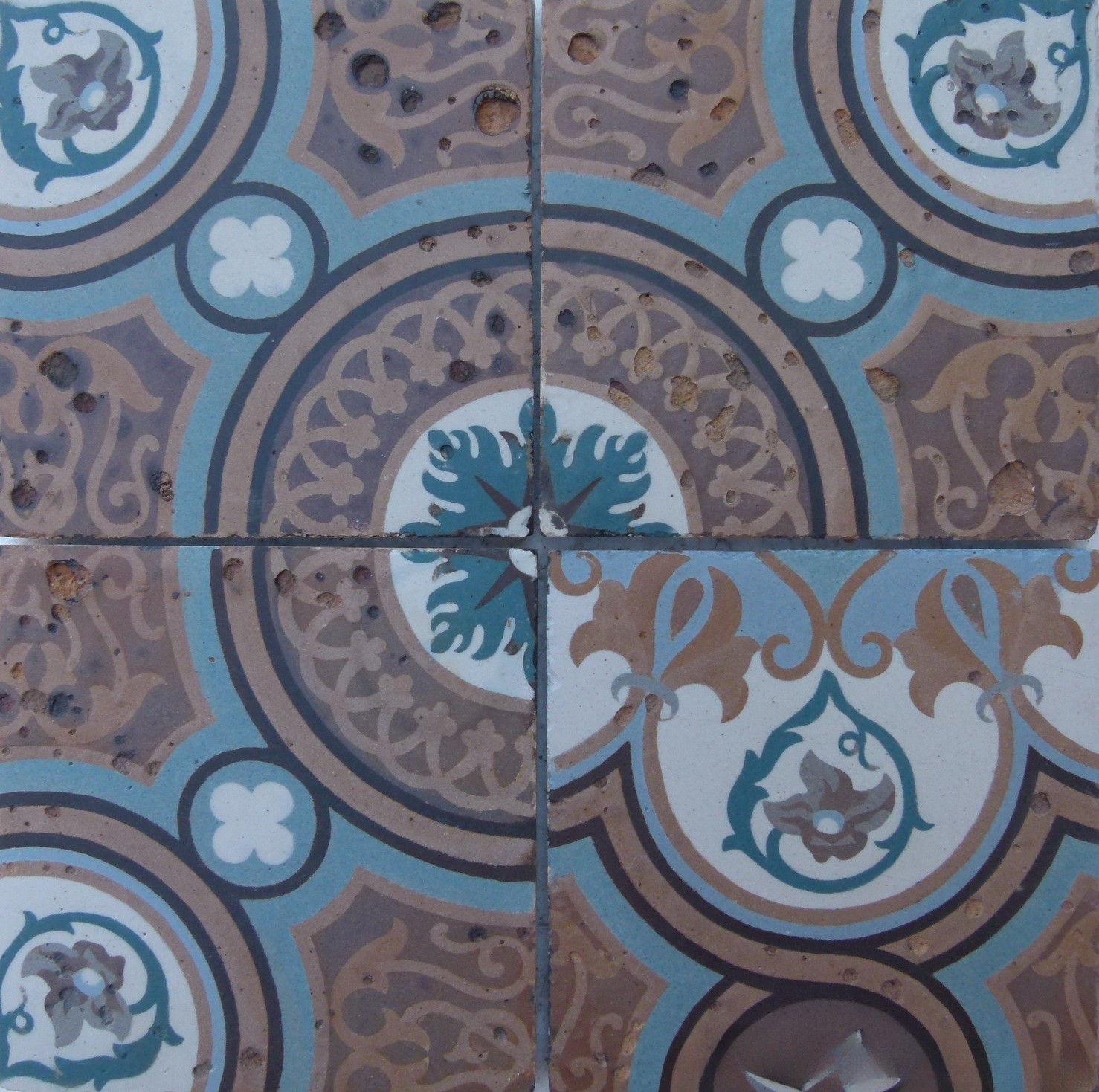
This 111 year old floor has antique presence; tonal variation across the clay slips and the beautifully aged surface all contribute to an authentic patina. A small number of tiles also bear distinctive kiln ‘pitting’ caused during the original firing process when coke exploded inside the kiln and small red hot pieces buried themselves into the tile surface creating small 'craters' , adding further individuality and historic charm. We show examples of this surface pitting, evident on just a handful of tiles, in the photo gallery.
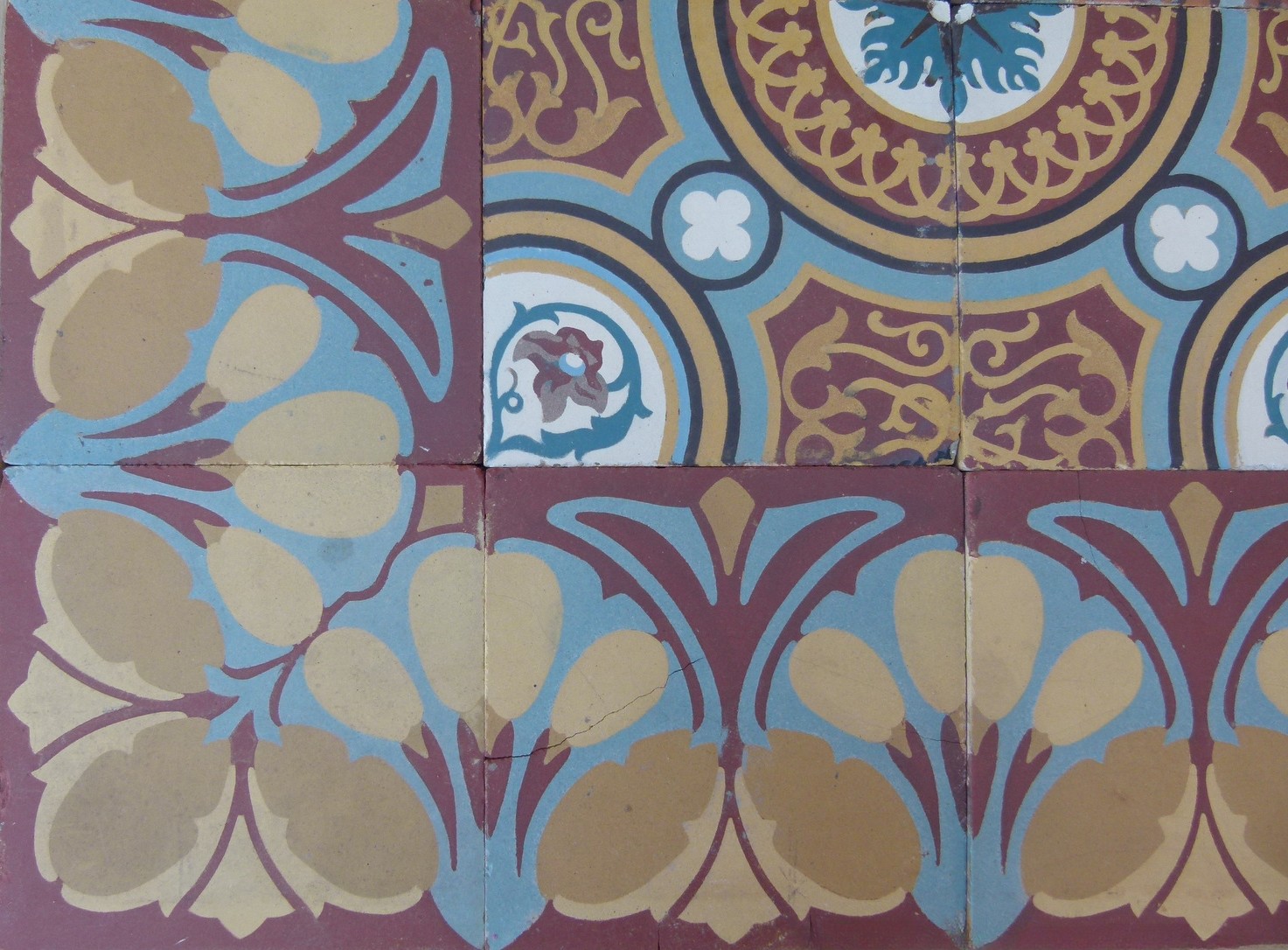
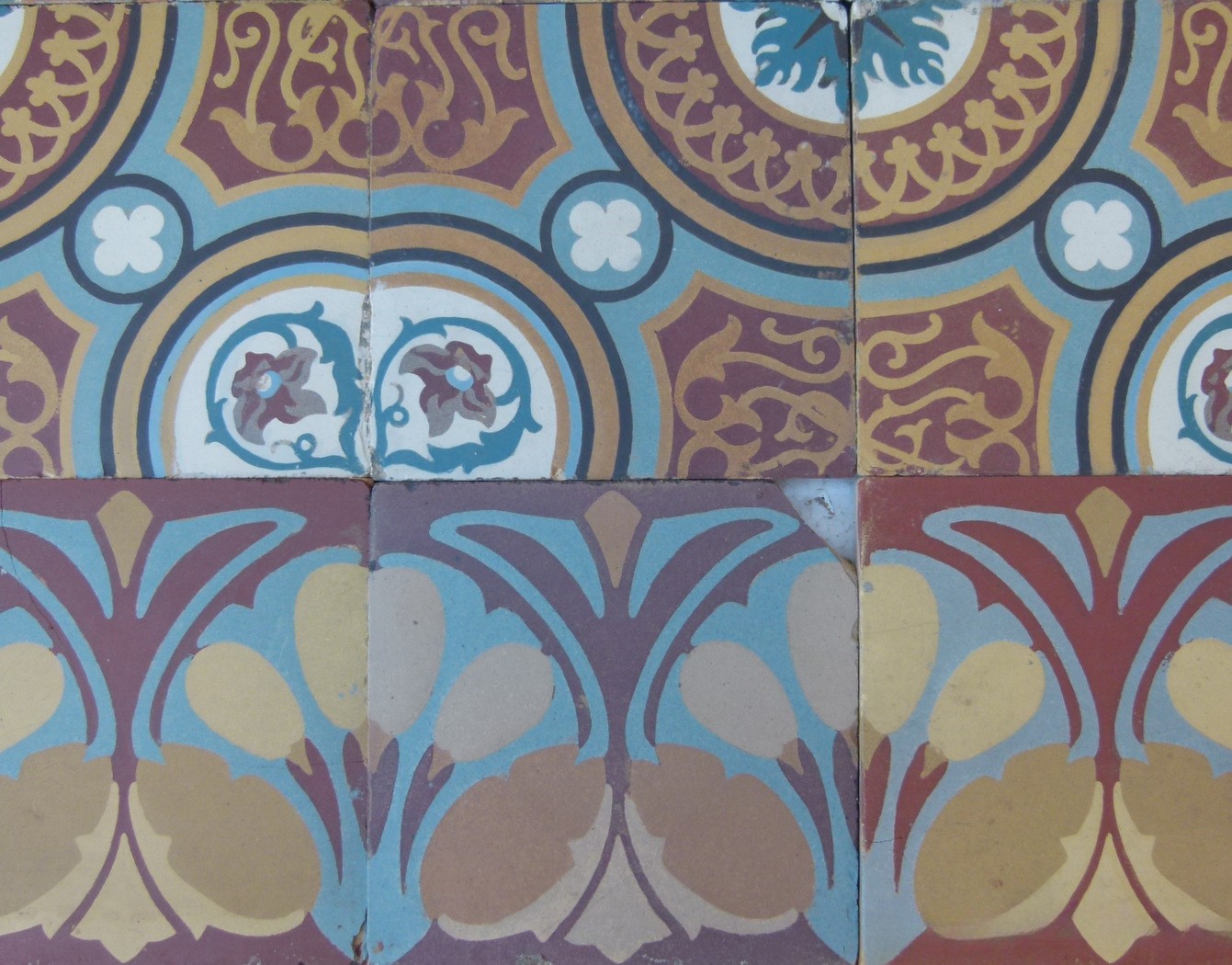
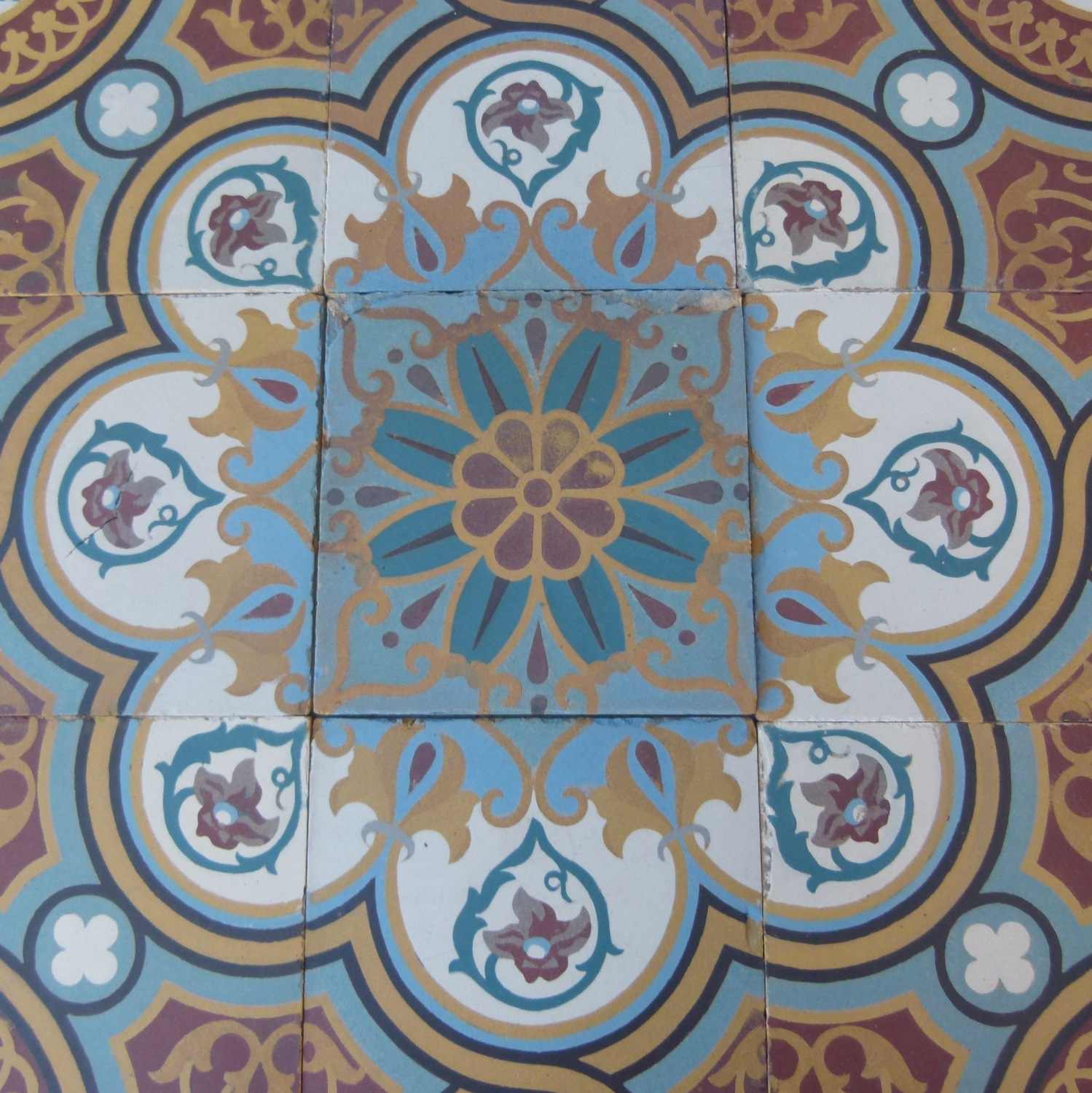
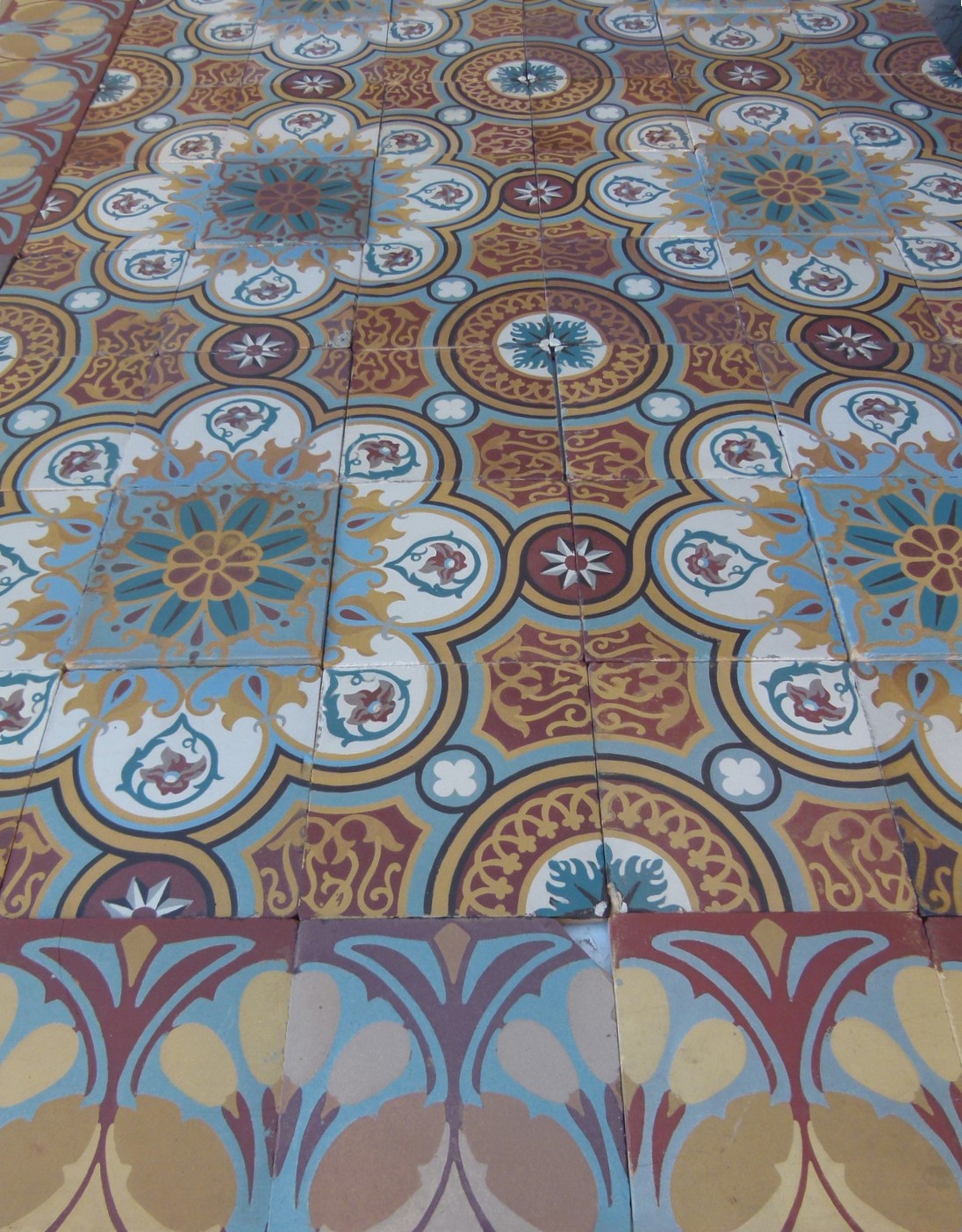
The composition of the floor uses three separate 6.7 inch square tile designs centred around a floral blue anchor tile, although an alternative layout excluding the blue motif is also possible. A limited number of original border tiles survive and can be incorporated as a decorative feature. A photograph showing the floor in situ, before lifting from its original Burgundian home, is included as the last image in the gallery.
Owing to the complexity of the design, we are happy to assist purchasers with layout planning and can also provide a technical floor plan for installation guidance.
Tile Quantities
- Blue Floral Field Tiles – 102 tiles – approximately 31 sq ft
- Motif Field “A” Tiles – 252 tiles – approximately 78.5 sq ft
- Motif Field “B” Tiles – 215 tiles – approximately 66.7 sq ft
- Large Border Tiles – 30 tiles plus 3 corners – approximately 10.3 sq ft / 18.4 linear ft
More details are available on request.
Note:-
Our antique tiles were originally handmade in single or two tile molds. Pre-computer fabrication these molds were machined by hand & the colour slips to create the tile were mixed by measure and eye. When firing the tiles, the kiln temperatures of c.1,100F degrees could also be variable. The result of this production process is that tiles made during this period of non-automation often display subtle size & thickness variations and there can be tonal variations in colors, all of which add to their charm and uniqueness. When photographing a floor, we always take a random section so that it is representative of the whole in tones and patina.
A rigorous quality control during the restoration process will include in the sale any tiles with groutable small chips and edge nibbles, expected of tiles more than 100 years old, but include for free any with larger defaults as rejects, which the tiler can then use for offcuts.
Can we help?
If you can provide a technical drawing, or a simple sketch with key dimensions, we are happy to assist in evaluating and recommending the best layout of the floor in your area of choice. Click here for more details